
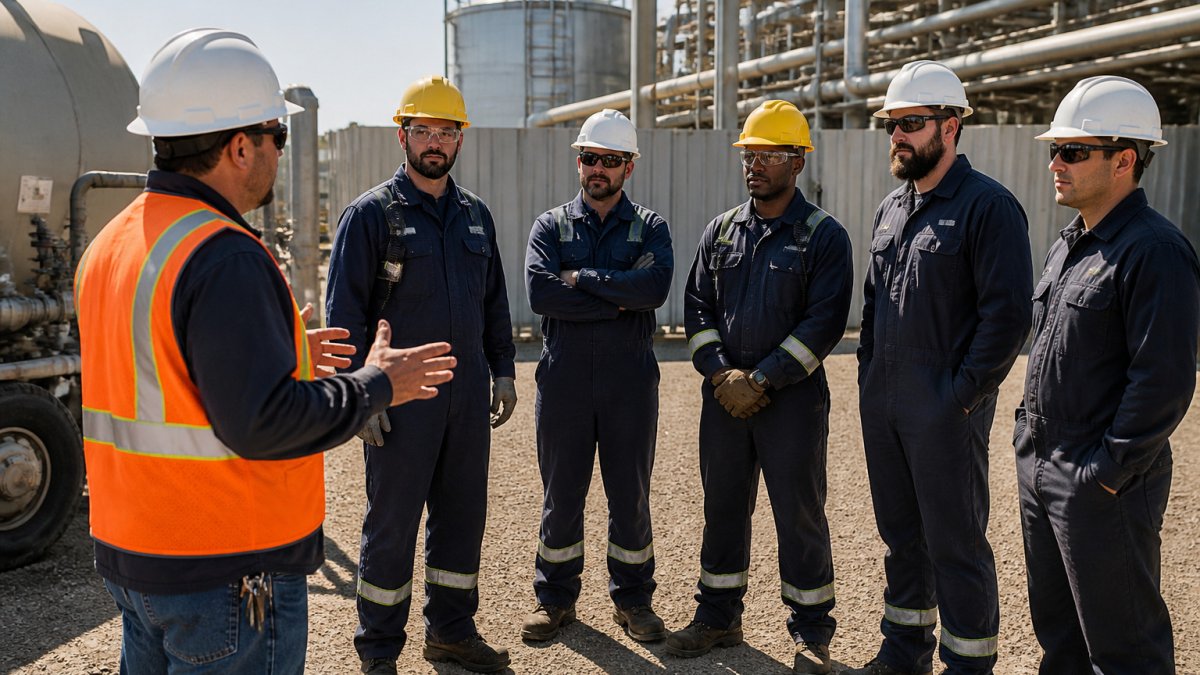
Last Updated: November 3, 2026
Quick Summary
Effective industrial safety training for field staff starts with the work, not a course catalog: map each role to its actual hazards, train to those exposures, and verify competency through observed performance on the equipment crews really use. OSHA requires training on job hazards but does not certify or approve training, so a card proves attendance, not compliance.
- Build training from a role-and-risk matrix that scores each field job title against the hazards it faces and controls.
- End every topic with a hands-on demonstration rather than a written quiz to confirm real capability.
- Use blended delivery: self-paced online modules for knowledge, hands-on verification for physical tasks.
- Tie each training record to course, role, and date so incident data can point to curriculum gaps.
- Avoid batch sign-offs collected without observation; they create records that claim unverified competence.
Table of Contents
- Why Field Staff Safety Training Fails Without a Field-First Plan
- Employer Responsibilities and the Regulations Behind Industrial Safety Training
- Industrial Safety Training Topics That Match Field Exposure
- Building Workplace Safety Training Programs Around Roles and Risk
- Your Field Staff Safety Training Checklist Before the First Class
- Industrial Safety Training for Field Staff Online: Where It Works and Where It Falls Short
- Measuring Whether Training Actually Changed Field Behavior
- Request a Training Program Review for Your Field Crews
- Frequently Asked Questions
Why Field Staff Safety Training Fails Without a Field-First Plan
Most industrial safety training for field staff collapses between the classroom and the job site. A crew member can pass a written quiz on lockout/tagout and still reach into a running conveyor the next week, because the training tested recall, not behavior under pressure.
Three failures repeat across industrial operations:
- Content written for the office. Slides describe a controlled plant floor while crews work around mobile equipment, temporary power, and shifting hazards.
- No role mapping. A forklift operator and a spotter get identical instruction that fits neither.
- No verification. Completion is logged; competence is assumed.
A field-first plan fixes all three. It starts with the work, not the course catalog.
Employer Responsibilities and the Regulations Behind Industrial Safety Training
Employers carry a legal duty to train workers on the hazards of their jobs, and the Occupational Safety and Health Administration enforces that duty through standards written for general industry and construction. The OSHA training requirements by standard page lays out which standards require training and what each must cover.
Here is the distinction most programs blur: OSHA sets the requirement to train, but it does not certify, approve, or issue training certificates. A card from any provider is evidence of attendance, not proof of compliance.
What OSHA Requires vs. What Good Training Looks Like
Compliance is the floor. Good training goes further:
| Element | Regulatory Minimum | Field-Ready Standard |
|---|---|---|
| Hazard coverage | Hazards in the applicable standard | Hazards at your actual sites, including changing conditions |
| Delivery | Training the worker can understand | Hands-on demonstration with the equipment used |
| Frequency | As the standard specifies | Refresher plus re-evaluation when conditions change |
| Documentation | Training records | Records tied to competency verification |
| Evaluation | Not always required | Supervisor sign-off on observed performance |
For a closer look at where violations originate, see our guide on OSHA violation prevention for industrial firms.
Industrial Safety Training Topics That Match Field Exposure
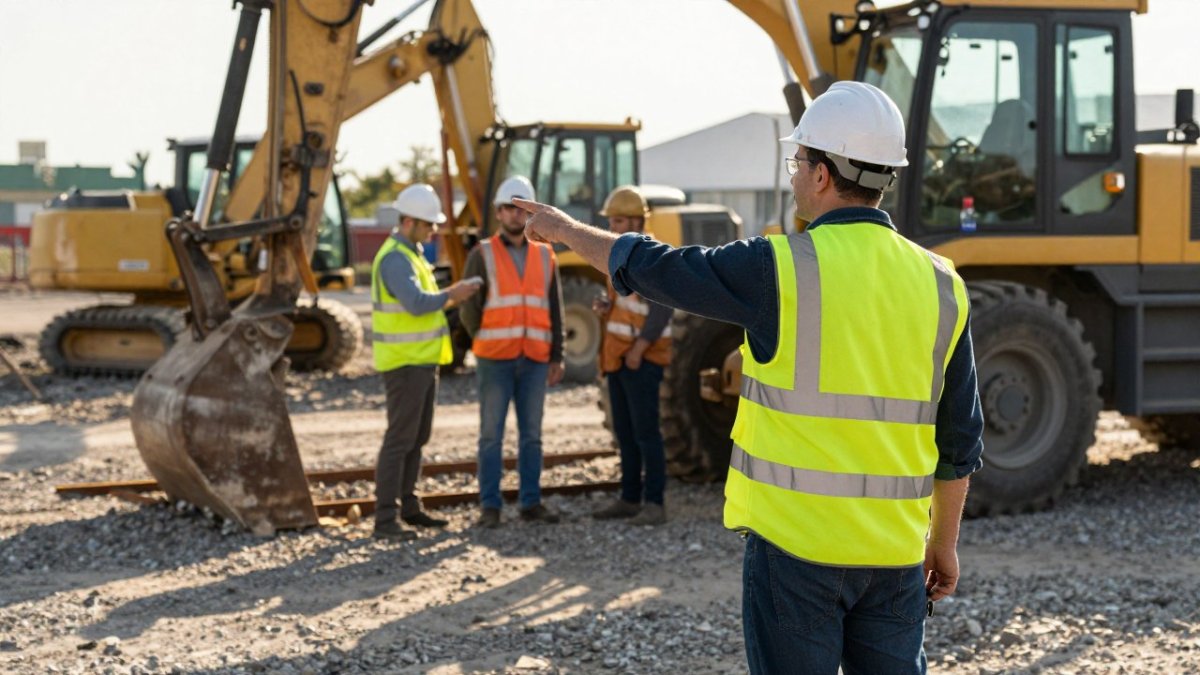
The right industrial safety training topics follow the exposure, not a generic syllabus. Build the list from what your crews actually encounter:
- Hazard recognition and assessment on live sites, including how conditions shift through a shift
- Personal protective equipment selection, fit, inspection, and limits
- Fall protection for elevated work, including anchor points and rescue planning
Each topic should end with a demonstration, not a quiz. A worker who can inspect a harness and identify a damaged lanyard in front of a supervisor has shown more than a passing score ever will.
Building Workplace Safety Training Programs Around Roles and Risk
Workplace safety training programs work best when built from a role-and-risk matrix rather than a course list. The matrix is the difference between a program that survives an audit and one that only looks complete on paper, and it gives you a defensible answer when an inspector, insurer, or plaintiff’s attorney asks why a specific worker received specific training.
Start by listing every job title in the field, then score each against the hazards that role controls or is exposed to. A practical sequence:
- Inventory roles. Operator, spotter, driver, technician, supervisor, attendant, lone worker, and any hybrid titles your crews actually use.
- Map exposure. For each role, list the hazards it faces and the hazards it controls for others. A spotter controls traffic exposure for the whole crew; a technician may face confined-space and chemical exposure no one else encounters.
- Assign required topics. Match training to exposure, not seniority.
- Set frequency. Distinguish initial training, refresher intervals, and re-evaluation triggers. Some standards set explicit refresher requirements; others leave the interval to the employer based on conditions. Where the standard is silent, document the reasoning behind your interval.
- Name the verifier. Identify who signs off that the worker can perform the task safely, and make sure that person has the field credibility to make the call.
A Worked Example: Three Field Roles, Three Curricula
The matrix only earns its keep when it produces different answers for different roles. Consider three common field positions on the same industrial site:
- Mobile equipment operator. Hazard communication, mobile equipment safe operating practices, pedestrian and traffic control awareness, pre-shift inspection, and lockout/tagout awareness where the operator services equipment. Operator evaluation is separate from classroom completion, and employer authorization to operate is a distinct step from either.
- Spotter/signal person. Traffic control, hand-signal and radio communication, blind-spot awareness, and the authority to stop work. A spotter who cannot halt an operation is not functioning as a spotter.
- Confined-space attendant. Atmospheric testing awareness, attendant duties, communication and rescue notification, and the limits of the attendant’s role, the attendant does not enter. Entrant training is a separate curriculum with its own rescue-planning requirements.
Three roles, three different topic sets, three different verification methods. A single all-hands session cannot produce that outcome.
Setting Refresher Intervals Without Guessing
Refresher intervals are where most programs drift. Treating each refresher trigger as part of an effective employee safety program helps keep training aligned with changing hazards and the work employees actually perform.
Watch out: a refresher that repeats the initial course verbatim does not satisfy the intent of retraining. Retraining should target the specific gap that triggered it, and the record should say what was retrained and why.
Keeping the Matrix Consistent Across Shifts and Sites
Programs that span multiple crews and shifts need one matrix, one set of verification criteria, and one records system, not a separate process per supervisor, so the night shift gets the same standard as the day shift. Our how-to on standardizing safety across multiple shifts walks through that process. If your matrix reveals gaps you cannot close with existing staff, a safety program review can map the exposure to a curriculum plan before the next training cycle.
Your Field Staff Safety Training Checklist Before the First Class
Use this field staff safety training checklist before scheduling any session:
- Job hazard analysis completed for each role and site type
- Required topics mapped to specific standards and to actual exposure
- Delivery format chosen per topic: hands-on, on-site, online, or blended
Skip any line and the program inherits a weak point. The checklist is boring. It is also the difference between training that holds up under scrutiny and training that only looks complete on paper.
Industrial Safety Training for Field Staff Online: Where It Works and Where It Falls Short
Online delivery earns its place for knowledge topics: hazard communication fundamentals, regulatory awareness, and refresher content that crews can complete between jobs.
It falls short wherever a physical skill or judgment call is involved. No module can verify that a worker can inspect a harness, test an atmosphere, or rig a fall arrest system correctly. Those require an evaluator watching the task.
The practical answer is blended delivery: self-paced online courses for the knowledge layer, hands-on verification for anything a worker will physically perform. If you are weighing the two formats, our comparison of hands-on versus online safety training breaks down the trade-offs.
Measuring Whether Training Actually Changed Field Behavior
Completion rates measure attendance, not safety. To know whether industrial safety training for field staff changed anything, measure at three levels: what workers know, what they do, and what happens on site. Most programs stop at the first level and assume the other two follow.
Level 1: Knowledge Retention
A written assessment at the end of a course confirms recall on the day of training, not retention a month later. A short follow-up assessment, a handful of scenario questions tied to the worker’s actual role, administered during a shift or at the next safety meeting gives a far better read. Draw the questions from the role-and-risk matrix, not a generic bank, so a failed question points to a specific curriculum gap.
Level 2: Observed Behavior and Competency Verification
This is where most programs are thinnest. A course completion record proves the worker sat through training. It does not prove the worker can inspect a harness, test an atmosphere, rig a fall arrest system, or recognize a changing hazard under time pressure.
A workable competency-verification process has four parts:
- A task-level checklist. Each critical task gets its own checklist of observable steps, not a pass/fail grade, but a record of what the evaluator saw.
- A qualified evaluator. Someone with field credibility and the authority to withhold sign-off. Where staffing allows, the evaluator should not be the person who delivered the training, so verification is independent.
- A field observation, not a simulation. Where the task can be observed during normal work, observe it there. A harness inspection on a clean training harness is not the same as one on a muddy harness pulled from a truck bed.
- A dated sign-off tied to the task and the equipment. The record should name the task, the equipment, the evaluator, and the date. A generic ‘competency verified’ line is not defensible.
Watch out: a sign-off collected in a batch at the end of a shift, without an actual observation, is worse than no sign-off at all.
Level 3: Site-Level Indicators
At the program level, track leading indicators: near-miss reports, observed safe-behavior rates from supervisor walk-throughs, the quality and specificity of hazard reports from the field, and corrective-action completion rates.
A drop in reported incidents right after training often means reporting got quieter, not that the site got safer. Compare incident data against near-miss volume before drawing conclusions. If incidents fall while near-miss reports also fall, underreporting is the more likely explanation.
Tying Results Back to Specific Courses
Measurement only drives improvement when you can connect an outcome to a course. Tag each training record with the course, the role, and the date, then review incident and near-miss data against those tags quarterly. When a pattern emerges, a cluster of near misses involving a specific task, crew, or piece of equipment, the matrix tells you which curriculum to revise and which workers need retraining.
Two practices make this real: supervisor observation with a simple rubric, scored during normal work rather than as a special event, and follow-up audits that check whether procedures taught in class are followed on site. When training must translate into consistent behavior across a crew, our guide on implementing consistent safety protocols at work covers the mechanics. For driver-facing crews, tracking near-miss incidents among drivers gives an early read on whether training is holding.
Request a Training Program Review for Your Field Crews
Most industrial operations are technically legal and still one bad incident away from a serious problem. The training exists, the records exist, and the gap between them and real field behavior goes unexamined until something fails.
Scomac Associates LLC provides practical, field-tested safety training and risk management solutions for towing, emergency response, and industrial operations. Contact the company through its website to discuss your training needs.
Frequently Asked Questions
What are the five basic safety trainings for industrial field staff?
Most industrial employers start with five core areas: hazard communication, personal protective equipment, emergency response including first aid and CPR, fall protection where work at height applies, and safe work practices specific to the tasks performed. OSHA standards set the requirements for several of these, but the exact mix depends on the hazards your field staff actually face. A crew that never works at height needs less fall protection depth than one that does. Build the list from a hazard assessment, not from a generic course catalog.
How often should field staff receive safety refresher training?
Some OSHA standards set specific retraining triggers, such as changes in the workplace or signs that an employee’s knowledge has lapsed, rather than a single fixed interval for every topic. Many employers set their own annual refresher cycle as a practical baseline and add retraining after incidents, near misses, or equipment changes. The right interval depends on the hazard and how often the task is performed. Document the schedule and the reason behind it so the program is defensible during an inspection.
How can employers check whether field staff understand safety procedures?
Written tests confirm recall, not competence. Pair them with field observation: watch the employee perform the task, check that PPE is worn and used correctly, and confirm they can explain what they would do in an emergency. Post-training competency verification through hands-on demonstration gives you a record that the person can actually do the work safely. For lone workers, add spot checks and documented check-ins. Keep the results with the training file so you can show the progression from classroom to field.
What should an industrial field safety training program include?
A solid program covers hazard recognition and risk assessment, the specific OSHA standards that apply to your operations, PPE selection and use, emergency response, and task-specific safe work practices. It should also include hands-on practice, a competency check, and a documented completion record. Delivery matters as much as content: field staff working nights and weekends across multiple locations need scheduling that does not depend on everyone being in one room. Mix short in-person sessions with online modules and verify understanding in the field.
Is online industrial safety training for field staff enough on its own?
Online modules handle knowledge transfer well: hazard communication basics, regulation overviews, and refresher content. They fall short on tasks that require physical skill, such as donning a harness, inspecting PPE, or responding to a spill. The strongest programs blend self-paced online courses with hands-on field instruction and a competency check. That blend also solves the scheduling problem for crews spread across shifts and locations, since the online portion can happen anytime and the hands-on portion is scheduled in blocks.
We tried safety training before and it did not stick. What makes hands-on training different?
Ask any training provider to show how their content maps to your specific operations before you commit.
