
Last Updated: November 7, 2026
Quick Summary
An operational safety audit is a structured review of how an industrial site actually runs day to day, compared against its safety rules and procedures. It checks work practices, training records, maintenance, housekeeping, contractor controls and incident reporting, and it combines document review, site inspection and worker interviews. A written safety manual alone does not show what happens on the floor, so the audit closes that gap.
- Define audit scope by operational area, shift pattern, contractors and applicable OSHA standards before inspecting.
- Build the checklist by area, using yes-or-no questions tied to the relevant standard.
- Combine document review, site inspection, worker interviews and a closing meeting with management.
- Rate each finding by severity and likelihood to set priorities for correction.
- Assign each corrective action a named owner, a deadline and a verification step by someone else.
Table of Contents
- What an Operational Safety Audit Covers at an Industrial Site
- Step 1: Define Audit Scope and Plan Around Your Operations
- Step 2: Build an Industrial Safety Audit Checklist by Area
- Step 3: Work Through the Workplace Safety Audit Process
- Step 4: Rate Findings and Set Priorities
- Turning Findings Into a Safety Audit Corrective Action Plan
- Applying These Steps to a Manufacturing Plant Safety Audit
- Scheduling Your Next Audit and Getting a Second Set of Eyes
- Frequently Asked Questions
What an Operational Safety Audit Covers at an Industrial Site
An operational safety audit is a structured review of how a plant or site actually runs day to day, compared against the safety rules, procedures and standards that apply to it. A written safety manual alone does not show what happens on the floor. The audit closes that gap.
A useful audit looks at more than equipment. It covers work practices, supervision, training records, maintenance, housekeeping, contractor controls, and how incidents and near misses get reported and acted on. Each of these areas can be tested against written procedures and against what workers actually do.
The audit answers three practical questions:
- Are our written procedures being followed?
- Do the procedures match the real hazards on site?
- Are problems being found, fixed and checked again?
Watch out: an audit that only checks paperwork will miss the hazards that matter most. Walk the floor and talk to the people doing the work.
Step 1: Define Audit Scope and Plan Around Your Operations
Start by deciding what the audit will cover. A single production line, a whole plant, or a site with contractors on shifts each call for a different scope and timeline.
Work through these items before any inspection begins:
- Operational areas: list each area, line, or department to be assessed
- Hazard sources: note machinery, chemicals, energy sources, material handling and elevated work
- Shift patterns: schedule some visits on nights and weekends if work happens then
- Contractors: decide whether their work areas and records are in scope
- Applicable requirements: identify the OSHA standards that govern your operations, such as lockout/tagout (29 CFR 1910.147) and machine guarding (29 CFR 1910.212)
Scope also depends on site size. A 40-person plant needs a shorter audit than a multi-building complex. Match the plan to what your team can realistically examine and follow up on.
Step 2: Build an Industrial Safety Audit Checklist by Area
A checklist keeps the audit consistent across areas and shifts, and it is the single document that determines whether two auditors looking at the same line reach the same conclusion. Build it by area, not as one generic list, so each inspector knows what to look for in a specific location and can finish a walk-through without improvising.
The structure below covers the areas most industrial sites actually run.
Production lines and machine guarding. Are guards in place, secured, and at the correct opening size for the hazard?
Lockout/tagout. Does each energy-isolating device have a lockout point that accepts a personal lock?
Confined spaces. Is there a current inventory of permit-required confined spaces, and does it match what is actually on the floor?
Chemical storage and handling. Are containers labeled and safety data sheets accessible on every shift? Are incompatible materials segregated, and is storage arranged so spills do not reach drains?
Material handling and mobile equipment. Are powered industrial truck operators evaluated, not just trained, as required under 29 CFR 1910.178(l)? Are pedestrian routes marked and separated from forklift traffic?
Utilities and maintenance areas. Are electrical panels clear of storage and labeled? Is arc flash and shock risk assessed for the tasks performed, and is PPE selected to match?
Contractor work. Are contractors screened for safety performance before selection? Is there a documented pre-job briefing covering site hazards, emergency procedures, and permit requirements?
Housekeeping and emergency readiness. Are exits and aisles clear on every shift, including during peak storage? Is combustible dust or accumulated material controlled in the areas where it accumulates?
Write each check as a yes-or-no question where possible. “Are guards in place and secured?” gets a clear answer. “Is machinery safe?” does not.
Review the checklist with supervisors before the audit.
Watch out: a checklist copied from another industry will produce confident answers about hazards your site does not have while missing the ones it does. Grounding the audit in site-specific records also makes worker input more useful, since employees can identify where written controls diverge from daily practice; IntegriSURE can help connect that consultation to the hazards your audit is designed to assess.
Step 3: Work Through the Workplace Safety Audit Process
Run the audit in a clear sequence. Most audits follow four stages.

- Document review. Read training records, inspection logs, maintenance histories, incident reports and procedures before going on the floor. Note gaps to test in person.
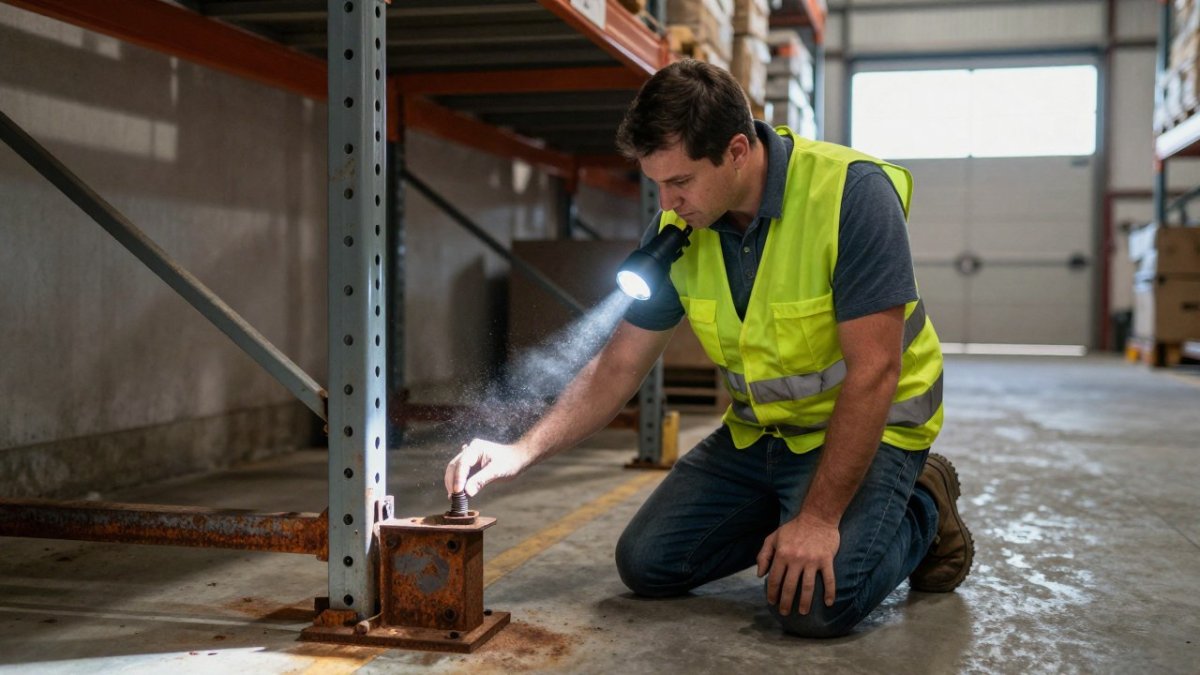
- Site inspection. Walk each area with the checklist. Observe tasks as they happen. Photograph or record conditions with time and location.
- Worker interviews. Talk with employees doing the work. Ask how they perform tasks, what slows them down, and whether they feel able to report hazards. Interview alone when possible so people speak openly.
- Closing meeting. Share preliminary findings with site management before writing the report. This prevents surprises and lets management correct factual errors.
Keep notes factual. Record what you saw and where, not opinions about people.
Step 4: Rate Findings and Set Priorities
Not every finding carries the same risk. Rate each one so management knows what to fix first.
A simple method scores each finding on severity and likelihood:
| Rating | Severity (potential harm) | Likelihood (how often exposed) | Action |
|---|---|---|---|
| High | Serious injury or fatality possible | Exposure occurs regularly | Correct immediately |
| Medium | Lost-time injury possible | Exposure occurs occasionally | Correct within days to weeks |
| Low | Minor injury or nuisance | Exposure is rare | Correct in the next planned cycle |
Combine the two ratings to set priority. A missing guard on a press that runs all day outranks a poorly labeled cabinet in a rarely visited storeroom.
Flag repeat findings separately. A problem found in last year’s audit and still open is a management issue, not just a hazard.
Turning Findings Into a Safety Audit Corrective Action Plan
An audit creates value only when fixes happen, and the difference between a program that improves and one that generates the same findings year after year is the discipline of the corrective action plan.
For each finding, record:
- The specific condition and location, with the standard or procedure it violates
- The priority rating from the previous step
- The corrective action required, described as an outcome rather than a task (“interlock restored and tested on all three presses,” not “maintenance to review”)
- The person responsible, by name and role, not by department
- The completion date
- The verification method and who will verify it
- The date the fix was verified and closed
Assign ownership to a person, not a function. “Maintenance” is not an owner; a named supervisor is.
Set deadlines by risk, not by convenience. High-priority findings that involve imminent danger should be corrected or the operation stopped before the next shift. Medium findings get a date measured in days to weeks.
Choose the verification method to match the fix. A guard replacement is verified by physical inspection and a functional test of the interlock. A training gap is verified by reviewing rosters and asking workers what they were taught.
Look for the root cause before writing the action. The example in the next section shows a bypassed interlock and stale training records that turned out to be one problem.
Track recurrence. A finding that appears in two consecutive audits is a management system problem, not a hazard to be fixed again. Flag repeat findings separately and escalate them to whoever owns the safety program, because the corrective action that failed the first time needs a different approach rather than a repeat of the same work order.
Run the plan on a fixed review cycle. Many industrial firms use a tracking sheet reviewed at a weekly safety meeting, with the full plan reviewed monthly by management.
Escalate overdue high-priority items immediately. A high-priority action past its due date is a decision point, not a line on a spreadsheet.
Scomac Associates LLC can help firms review their safety programs and follow-up processes. OSHA guidance on establishing a safety and health program
Applying These Steps to a Manufacturing Plant Safety Audit
Consider a mid-sized manufacturing plant with three shifts and regular contractor work. The audit team first defines scope: two production lines, the maintenance shop and the loading dock, with contractors included for the loading dock.
Document review shows that lockout/tagout training records for the night shift are two years old. The site inspection on night shift then finds a press with a bypassed interlock. The worker interview reveals the bypass was done to keep production moving during a jam. Two findings, one root cause.
The team rates the bypassed interlock high priority. Management assigns the maintenance supervisor to restore the interlock and retrain the night crew within five days. The follow-up check confirms both actions. The training gap and the bypass were linked, so fixing only the interlock would have left the cause in place.
This is why the interviews and document review matter. Equipment alone never tells the whole story.
Best for: plants with multiple shifts and outside contractors, where practices vary between groups. Skip if: you only want a paperwork check with no field observation.
Scheduling Your Next Audit and Getting a Second Set of Eyes
Set a regular audit schedule based on your risk level. High-hazard areas may need quarterly reviews, while lower-risk areas can be checked annually. Adjust the schedule after any serious incident, major process change, or new contractor onboarding.
Consider bringing in an outside reviewer every so often. Internal teams often miss hazards they have become used to. A second set of eyes can catch what familiarity hides. Scomac Associates LLC can help you review your audit schedule and program.
NIOSH guidance on workplace safety program evaluation
Ready to find the gaps your current program may be missing? Contact Scomac Associates LLC to request an operational safety audit or a safety program review tailored to your site.
Frequently Asked Questions
What are the three main types of safety audits?
Safety audits are commonly grouped into management system audits, which check whether your safety program is designed and documented correctly; compliance audits, which check against specific regulations and standards such as OSHA requirements; and operational or field audits, which check what actually happens on the floor. Industrial sites usually need all three, but the operational audit is the one that shows whether written procedures match daily work. Decide which type you are running before you write the checklist, because the scope determines the evidence you need to collect.
Does OSHA require safety audits?
OSHA does not require a specific type of safety audit by name for most general industry employers. Many of its standards do require employers to inspect equipment, conduct periodic evaluations, or review procedures, and those requirements can be met through an internal audit. Check the specific standards that apply to your equipment and processes, such as machine guarding or lockout/tagout, and confirm what inspection or review frequency each one requires. An audit is one practical way to document that you are meeting those obligations.
How often should an industrial site conduct a safety audit?
There is no single federal frequency for operational safety audits. Most sites set a schedule based on hazard level, incident history, changes in equipment or processes, and any frequency that a specific OSHA standard requires. A common approach is a full audit annually with focused area audits more often in high-risk zones. Schedule an additional audit after major changes, new equipment, or a serious incident, and do not let the calendar override a known problem.
What is the difference between a safety audit and a safety inspection?
A safety inspection is usually a narrower, recurring check of a specific item or area, such as a forklift pre-shift inspection or a guard check. A safety audit is a broader, planned review of how the whole program or a defined area performs, including documents, training records, interviews with workers, and whether controls work in practice. Inspections catch today’s hazards; audits show whether your system reliably finds and fixes them.
