

Table of Contents
- Why OSHA Violation Prevention Fails at Most Industrial Sites
- Start With an Industrial Workplace Hazard Assessment
- The OSHA Compliance Checklist for Manufacturing That Covers the Big Four
- Lockout/Tagout Procedures That Hold Up in the Field
- Training and Documentation That Survive an Audit
- OSHA Inspection Preparation: What to Have Ready Before They Arrive
- Leading Indicators: Measuring Prevention Before an Incident Happens
- Conclusion
- Frequently Asked Questions
Last Updated: October 19, 2026
Why OSHA Violation Prevention Fails at Most Industrial Sites
Most industrial safety programs fail because they treat OSHA violation prevention as paperwork. A binder gets written, training gets logged, and everyone moves on until an inspector shows up.
That gap is where citations are born. The Occupational Safety and Health Administration does not cite companies for missing binders.
Below, we break down how to build a prevention system that holds up on a Tuesday night shift, not just during an audit.
The most common mistake we see is a safety program written by someone who has never worked the floor. It reads well and fails in practice. If your crew cannot explain a procedure in their own words, it is not a real procedure yet.
Start With an Industrial Workplace Hazard Assessment
An industrial workplace hazard assessment is a documented walkthrough of every task, machine, and chemical on site to identify what can hurt someone and how. Skip it and every control afterward is guesswork.
Here is how to run one:
- Map every job task, from routine maintenance to changeovers and cleanup.
- Walk the floor with the crew, not just management. Operators know where the real risks hide.
- Rank each hazard by severity and likelihood, then set a fix date.
- Record the controls you already have and note the gaps.
- Reassess after any process change, new equipment, or incident.
A common mistake is assessing once and filing it away. Equipment gets modified, shifts get added, and the old assessment goes stale. Review it annually and after every serious near miss.
The OSHA Compliance Checklist for Manufacturing That Covers the Big Four
An OSHA compliance checklist for manufacturing should center on the hazards that produce the most citations and the worst injuries: falls, machine contact, hazardous energy, and chemical exposure. Get these four right and you eliminate most of your exposure. The table below is the at-a-glance version; the subsections turn each row into a field-level control plan.
| Hazard Area | Core Control | Governing Standard | What Inspectors Look For | Common Failure |
|---|---|---|---|---|
| Fall protection | Guardrails, personal fall arrest, training | 29 CFR 1910.28 and 1910.30 (general industry); 1910.23 for ladders | Unprotected edges, unrated anchor points, no training records | Guardrails removed for equipment access and never reinstalled |
| Machine guarding | Physical barriers, interlocks, awareness devices | 29 CFR 1910.212 (general requirements); 1910.219 for mechanical power transmission | Exposed moving parts, missing interlock verification, no guarding on the point of operation | Guards removed for speed or jam clearing and not replaced |
| Hazardous energy | Written lockout/tagout program, locks, tags, verification | 29 CFR 1910.147 | Machine-specific procedures, energy verification step, group lockout, periodic inspection | No verification of zero energy; generic procedure that does not match the machine |
| Chemical exposure | Labels, SDS access, training, respirators where required | 29 CFR 1910.1200 (hazcom); 1910.134 (respiratory protection) | Current labels, SDS availability, training before exposure, fit-test records | Outdated chemical inventory; respirator users never fit-tested |
Fall Protection and Work at Height
Falls remain one of the leading causes of death in general industry, and unprotected edges are the usual culprit. Under the walking-working surfaces rule, any worker exposed to a fall of four feet or more, or to any fall into dangerous equipment regardless of height, needs a fall protection system and training.
Run these checks every shift:
- Guardrails intact on mezzanines, platforms, and loading docks, with the top rail, midrail, and toe board in place
- Anchor points rated and inspected, with the rating documented rather than assumed
- Harnesses and lanyards inspected before each use and removed from service when damaged
A common failure is a guardrail removed to move equipment or product and never reinstalled. Build a reinstallation check into the work order so the guard goes back before the area returns to production.
Machine Guarding and Hazardous Energy
Machine guarding covers any moving part that can catch, cut, or crush. The general requirements standard requires guards to protect the point of operation, the power transmission apparatus, and other moving parts, attached to the machine where possible.
Pair guarding with control of hazardous energy. A machine must be fully de-energized before anyone reaches into it for repair or jam clearing.
Field checks that catch the real failures:
- Interlocks verified, not just present: open the guard and confirm the machine will not start
- Guards on belts, pulleys, chains, and sprockets, not only the point of operation
- Jam-clearing and changeover steps written into the procedure, because those are the moments guards come off
Hazard Communication and Respiratory Protection
Hazard communication means every chemical on site has a current label and a Safety Data Sheet the crew can reach during the shift, not locked in an office.
Respiratory protection goes further. If respirators are required, you need:
- A written program with a designated program administrator
- Medical evaluations before fit testing and use
- Fit testing, with annual retesting for tight-fitting respirators
For the full requirements, see the OSHA respiratory protection standard. Skipping fit testing is one of the most frequent findings we see, and it is easy to fix before an inspector asks for the records.
Build the big four into a one-page shift-start checklist rather than a binder. A supervisor who can walk the floor with a single page and initial each item will catch more than a program that lives in a filing cabinet.
Lockout/Tagout Procedures That Hold Up in the Field
Lockout/tagout procedures work only when they match how the machine actually gets serviced. A generic template copied from another plant will not survive a field check or an inspection.
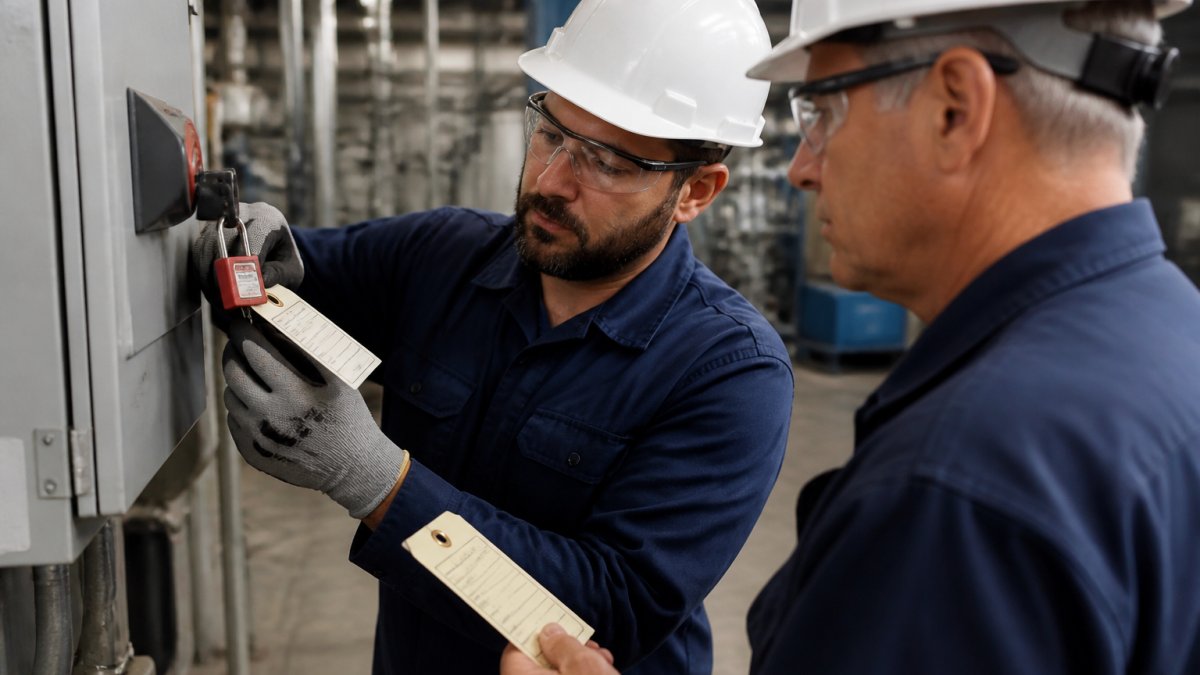
Build each procedure around the real steps:
- Identify every energy source, including stored energy like springs and pressure
- Sequence the shutdown and isolation steps in order
- Specify how to verify zero energy before work starts
Lockout fails at handoff. When one shift locks out and the next takes over, clear communication decides whether the machine stays safe. Write that handoff into the procedure.
Training and Documentation That Survive an Audit
Safety training is the first thing an inspector asks to see, and vague sign-in sheets do not count. You need records showing who was trained, on what, when, and by whom.
Documentation that holds up includes:
- Training rosters with dates and topics
- Hands-on competency checks, not just attendance
- Equipment inspection logs
We have watched companies with solid programs get cited simply because they could not produce the records. The work was done. The proof was missing.
Photograph completed inspections and attach them to the digital log. A timestamped photo of a checked guard or a locked disconnect is far stronger evidence than a checkbox someone filled in later.
OSHA Inspection Preparation: What to Have Ready Before They Arrive
OSHA inspection preparation is not about hiding problems. It is about proving your system works and keeping the visit controlled. Knowing the sequence of an OSHA inspection is what turns a stressful visit into a manageable one. The OSHA inspection overview lays out the steps, and the field guidance below turns them into a readiness plan.
The inspection sequence, step by step
- Opening conference. The compliance officer presents credentials and explains the scope and reason for the visit. Designate one person to accompany the officer and one to pull records on request. Ask for the scope in writing.
- Walkaround. The officer inspects the areas in scope, may interview workers privately, and may take photos and measurements. Keep the accompanying manager with the officer, but do not coach workers or answer for them.
- Records review. Training records, injury and illness logs, written programs, and inspection logs are requested. Produce what is asked for, promptly and completely.
- Closing conference. The officer discusses apparent violations and possible abatement periods. Take notes, ask clarifying questions, and do not commit to a correction date you cannot meet.
What to have ready in one place
- Written safety program and current hazard assessments
- Training and inspection records, with hands-on competency checks
- Injury and illness logs (the OSHA 300 log and 300A summary where required)
How citations are classified
Classification drives penalty exposure and abatement deadlines. The categories an industrial employer is most likely to see:
- Other-than-serious: a violation that probably would not cause death or serious physical harm. Lower penalties, straightforward abatement.
- Serious: substantial probability of death or serious physical harm where the employer knew or should have known. The most common category on industrial floors, with higher penalties.
- Willful: intentional disregard of the standard or plain indifference to worker safety. The highest penalty tier.
Penalty amounts are adjusted annually for inflation, so confirm current figures on the agency’s penalties page rather than relying on last year’s number.
After the visit: the abatement clock
Abatement is where prevention and compliance meet. For each citation, note the abatement date, assign an owner, and track it like a production deadline. If you cannot correct by the date, request an extension in writing before the deadline and show good-faith progress. You can also contest within the deadline on the notice, but that is a legal decision, talk to counsel first.
The most common inspection mistake is treating the closing conference as the end. The abatement period is where repeat citations are born. A citation left open past its date becomes a failure-to-abate finding and raises the penalty on everything that follows.
Behaviors that keep the visit controlled
- Answer questions directly. Do not volunteer guesses. If you do not know, say you will confirm and follow up.
- Do not create new documents during the visit to fill gaps; produce what exists and note what is missing.
- Keep worker interviews private and uncoached; coaching turns a routine visit into a credibility problem.
Inspection readiness is a prevention system running in reverse: the same hazard assessments, training records, and corrective-action logs that prevent citations are the evidence that answers an inspector. Build them for the floor, and the visit takes care of itself.
Leading Indicators: Measuring Prevention Before an Incident Happens
Lagging metrics like injury rates tell you what already went wrong. Leading indicators tell you whether prevention is working before someone gets hurt.
Track these monthly:
- Near-miss reports submitted per crew
- Percentage of inspections completed on schedule
- Open corrective actions past their due date
A rising near-miss count is often good news: workers trust the reporting system. A flat zero usually means nobody is reporting, not that nothing is happening.
Measure the work that prevents injuries, not just the injuries themselves. Leading indicators give you time to fix a problem before it becomes a citation or a hospital visit.
Conclusion
Building real OSHA violation prevention takes more than a binder: hazard assessments that match the floor, controls that hold on the night shift, and records that prove the work was done.
Our hands-on, field-tested safety training and policy development close the gap between written manuals and real-world operations. We help industrial teams build procedures that survive an audit and an incident.
Frequently Asked Questions
What are the most common OSHA violations in manufacturing?
The recurring top of the list includes fall protection, hazard communication, machine guarding, lockout/tagout, respiratory protection, and powered industrial truck issues. These show up year after year because they involve daily tasks where shortcuts creep in. Prevention means treating them as routine checks rather than annual paperwork. A written program, documented training, and a corrective action log for each finding are what inspectors look for first.
How can industrial firms prepare for an OSHA inspection?
Keep your written safety program, training records, injury logs, and corrective action documentation organized and accessible. Designate one person to greet the compliance officer and confirm the scope of the visit. Walk the floor weekly so you know what an inspector will see. If something is unsafe, fix it before the visit, not during it. OSHA inspection preparation is mostly about having evidence that your program is real and followed, not a scramble the day of.
How often should workplace safety training be conducted?
OSHA requires training at initial assignment and when conditions or equipment change, and refreshers are expected for standards like lockout/tagout and respiratory protection. Many industrial sites run annual refreshers plus short toolbox talks monthly. The bigger issue is retention: hands-on practice on your own equipment beats slide decks. Track who attended, what was covered, and when, because training records are one of the first things requested during an inspection.
What should a company do after receiving an OSHA citation?
Post the citation where employees can see it, correct the hazard immediately, and document the fix with photos and dates. You have a short window to contest, typically 15 working days, so decide quickly with counsel if you disagree. Then look beyond the cited item: if a guard was missing on one machine, check every machine. A corrective action log that shows you fixed the specific issue and audited the rest of the site strengthens your position and prevents repeat violations.