Last Updated: November 24, 2026
Quick Summary
Towing driver incident reporting training teaches drivers what to capture, when to capture it, and why it matters before the truck rolls. Build a short procedure drivers can follow at 2 A.M., capture scene details and photos before the vehicle moves, and separate scene safety from paperwork. Training fades without reinforcement, so pair it with toolbox talks and trend reviews.
- A report written three days later from memory protects nobody; document at the scene.
- Your procedure must work at 2 A.M. in the rain, not just in a quiet office.
- Photograph the scene before the vehicle moves, because once it moves the scene is gone.
- Near miss reporting should be as normal as a fuel log and kept blameless.
- An investigation that ends at driver error found a name, not a cause.
Table of Contents
- Why Incident Reporting Training Matters More Than the Form Itself
- Step 1: Build a Towing Company Incident Reporting Procedure Drivers Can Follow at 2 A.M.
- Step 2: Capture the Right Details at the Scene With a Tow Truck Accident Report Form
- Step 3: Separate Scene Safety and Traffic Control From the Paperwork
- Step 4: Make Near Miss Reporting for Tow Truck Drivers Routine, Not Rare
- Step 5: Give Supervisors Incident Investigation Training for Supervisors That Goes Beyond Blame
- Step 6: Track Corrective Actions and Incident Trends
- Step 7: Reinforce Reporting Through ERSCA-Aligned Training and Toolbox Talks
- Frequently Asked Questions
Why Incident Reporting Training Matters More Than the Form Itself
Most towing companies have a form. Few have a procedure. That gap is where defensibility goes to die.
Many small fleets hand a driver a clipboard and call it a reporting system.
A report written three days later from memory protects nobody. A report written at the scene, by a driver who knows what to look for, protects the company, the driver, and the customer.
What a Report Actually Protects
A solid incident report does three jobs at once. It preserves evidence while it’s still fresh. It creates a timeline that holds up under scrutiny. And it shows that your operation had a procedure and followed it.
The towing company incident defensibility strategies behind that third job are worth understanding in full. Insurers, attorneys, and regulators all read the same document differently. Your report has to survive all three readings.
Step 1: Build a Towing Company Incident Reporting Procedure Drivers Can Follow at 2 A.M.
Your procedure has to work at 2 A.M., in the rain, with a driver who just watched a car roll.
Build it around what a driver can actually do on a shoulder. Keep the steps short. Use plain language. Put the most important items first.
A workable towing company incident reporting procedure covers the same ground every time:
- Stop, secure the scene, and check for injuries
- Call dispatch and 911 as needed
- Photograph the scene before anything moves
Test the procedure with drivers who work nights, since they are the ones most likely to find the gaps.
Step 2: Capture the Right Details at the Scene With a Tow Truck Accident Report Form
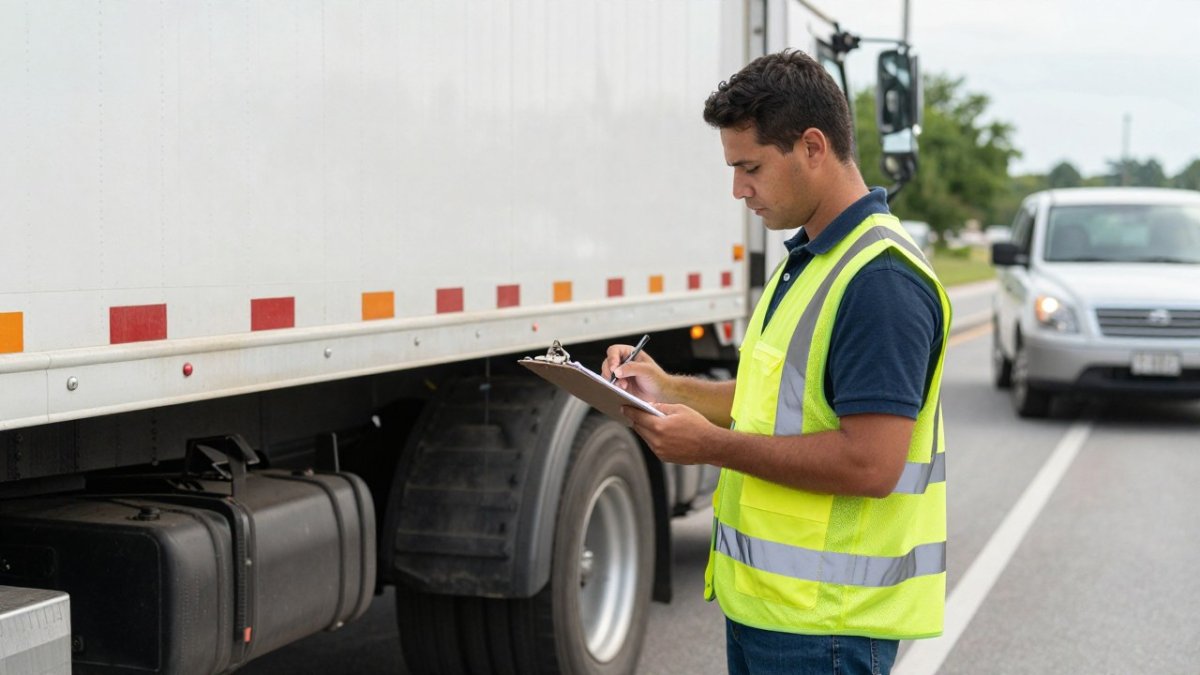
The best tow truck accident report form is short enough to finish at the scene and detailed enough to answer questions months later. Most forms fail one of those two tests.
What Belongs on a Tow-Specific Report
A generic fleet accident form doesn’t fit towing work. Your form should have fields for the things that only happen on a tow scene:
- Dispatch details: call time, arrival time, unit number, driver name, and the dispatcher who assigned the call
- Scene location: address, mile marker, lane, shoulder width, and whether the scene was in a work zone or a curve
- Traffic control setup: cone placement, advance warning distance, arrow board or flashers used, and whether a shadow or blocker vehicle was on scene
A completed example helps more than a blank form. Build one sample report for a roadside near miss, one for a vehicle strike on scene, one for a driver injury during hookup, and one for property damage to a customer vehicle. Walk new drivers through all four during onboarding. Drivers who see a finished example tend to ask better questions than drivers handed a blank page.
What to Document Before the Truck Moves
Once the vehicle moves, the scene is gone. Photograph and note these first:
- Wide shots of the whole scene from multiple angles
- Close-ups of damage, debris, and skid marks
- Position of every vehicle before recovery
Preserving Digital Evidence Without Creating a New Problem
Phone photos and dispatch records are evidence, and they’re easy to lose or mishandle. A few habits keep them usable:
- Keep the original file. Don’t crop, filter, or text photos to anyone. Send copies, not originals.
- Note the time each photo was taken and match it to the dispatch log. Timestamps are one of the first things a claims adjuster checks.
- Capture the scene before cleanup, not after. A clean scene photo proves nothing.
Watch out: drivers who skip photos because “it was a simple hookup” are the ones who can’t answer questions later. The scene you didn’t document is the one that gets disputed.
Privacy and Customer Information
Reports contain names, phone numbers, plate numbers, and sometimes medical details. Treat the report like a personnel file. Limit who can access it, store it in one place, and don’t leave copies in the truck cab. If a customer asks what you’re writing down, tell them plainly. A short explanation at the scene prevents a longer conversation later.
Step 3: Separate Scene Safety and Traffic Control From the Paperwork
Paperwork never comes before safety. Ever.
Scene safety, traffic control, and advance warning come first. Blocking and protecting the incident scene protects the driver, the customer, and passing traffic. Documentation starts only once the scene is stable.
Teach drivers this order and drill it. A driver who reaches for a clipboard before setting cones is a liability, not a record keeper. The report can wait two minutes.
Step 4: Make Near Miss Reporting for Tow Truck Drivers Routine, Not Rare
Near misses are free lessons. Most companies throw them away.
Near miss reporting for tow truck drivers should be as normal as a fuel log. A close call with passing traffic, a strap that slipped, a winch line that snapped under load: all of it belongs in the record.
Make it blameless. If drivers fear discipline, they’ll stay quiet, and you’ll learn nothing until someone gets hurt. Ask one question on every report: what almost happened? Then act on the answers.
Step 5: Give Supervisors Incident Investigation Training for Supervisors That Goes Beyond Blame
An investigation that ends at “driver error” has failed. It found a name, not a cause.
Incident investigation training for supervisors should teach root cause thinking. Ask why the error was possible. Was the procedure unclear? Was the equipment worn? Was the driver rushed by dispatch? Corrective action follows the cause, not the person.
Who Does What After a Report Comes In
Most reporting failures aren’t paperwork failures. They’re handoff failures. Nobody is sure who owns the next step, so nothing moves. Spell out the roles before an incident happens.
- The driver secures the scene, captures the report, and notifies dispatch. The driver does not decide whether the incident is reportable.
- The dispatcher logs the notification, preserves the dispatch record, and routes the report to the supervisor on duty. The dispatcher does not edit the driver’s report.
- The supervisor reviews the report the same shift, confirms witness contacts, and decides whether the incident needs escalation. The supervisor does not close the report alone.
A simple rule helps: the person who witnessed the incident should not be the only person who decides what happens next.
When to Escalate, and to Whom
Some incidents go up the chain immediately, not at the end of the week. Injuries, fatalities, vehicle strikes involving the public, workplace violence or threats, and any incident that draws law enforcement to the scene should reach the safety lead the same day.
Supervisors also need to know when an outside agency has to be contacted. That decision is not the same for every incident, and it is not the same in every jurisdiction.
Internal Deadlines vs. Regulatory Deadlines
Three different clocks run after an incident, and they don’t match:
- Internal deadlines: set by your own procedure. A common pattern is same-shift notification to the supervisor, next-business-day review by the safety lead, and a corrective action plan within a week.
- Recordkeeping requirements: federal rules govern which work-related injuries and illnesses must be recorded in the employer’s injury log. Supervisors should know those rules well enough to route the report correctly.
- Reporting requirements: federal rules require employers to report certain severe events within set timeframes. Confirm the current requirements against the official source.
- State and local requirements: some states and localities add their own reporting rules for traffic incidents, hazardous materials releases, or public injuries. Know what applies where you operate.
Don’t rely on memory for any of these. Keep the current federal, state, and local reporting requirements in the written procedure, review them at least annually, and confirm them against the official sources.
Watch out: a supervisor who waits until the end of the week to escalate an inpatient hospitalization may already have missed the federal reporting window. The clock starts at the incident, not at the paperwork.
Step 6: Track Corrective Actions and Incident Trends
A corrective action nobody tracks is a suggestion. Close the loop.
Log every action with an owner and a due date. Review incident trends monthly. Look for patterns: same location, same equipment, same shift, same driver group. Patterns are where prevention lives.
| What to Track | Why It Matters | Review Rhythm |
|---|---|---|
| Incident type and location | Spots repeat problems | Monthly |
| Root cause category | Shows where training falls short | Monthly |
| Corrective action status | Keeps fixes from stalling | Weekly |
| Near miss volume | Early warning signal | Monthly |
| Training completion | Confirms the crew is current | Quarterly |
Step 7: Reinforce Reporting Through ERSCA-Aligned Training and Toolbox Talks
Training fades without reinforcement. Two tools keep it alive: structured operator education and short, regular talks.
ERSCA training programs give drivers a professional standard to work toward. You can review official program information at ERSCA training programs. Pair that with toolbox talks on reporting: ten minutes, one scenario, one lesson.
Written expectations belong in your safety manual. The towing safety manual template guide shows what to include so reporting procedures and training expectations are documented, not assumed. And because reporting only works inside a broader program, the towing safety culture guide explains how to build one that holds.
A certificate proves someone completed a program. It doesn’t prove they can document an incident at 2 A.M.
Frequently Asked Questions
What incidents should tow truck drivers report?
Any event that caused or could have caused injury, equipment damage, property damage, or a regulatory issue belongs in the reporting system. That includes collisions, winch line failures, rigging slips, struck cones, close calls with passing traffic, workplace violence or threats, and near misses where nothing was damaged. Towing incident reporting works best when drivers report the small stuff, because those near misses reveal the hazards that lead to serious crashes. Build a clear list in your procedure so drivers are not guessing at the roadside.
How soon should a towing company report a workplace incident?
Set an internal deadline that is shorter than any external one. A practical rule is a verbal heads-up to dispatch or a supervisor before the driver leaves the scene, with the written report finished before the end of the shift while details are fresh. Separately, federal rules set external reporting timeframes for severe events. Check current official guidance for exact requirements, and train supervisors on the difference between internal and regulatory timelines.
What is the difference between an incident report and an accident report?
An accident report documents an event that produced damage or injury. An incident report is broader and covers any unplanned event, including near misses where nobody was hurt and nothing broke. Towing companies need both, but the incident report is the one that catches problems early. If your tow truck accident report form only has fields for collisions, drivers will not report the winch slip or the close call, and you lose the warning signs that prevent the next accident.
How can managers use incident reports to prevent repeat incidents?
Read reports in batches, not one at a time. Look for patterns: the same intersection, the same equipment, the same shift, the same recovery setup. Then assign a specific corrective action with an owner and a due date, and verify it was completed. Share the lesson at toolbox talks without naming the driver. A report that never drives a change is just paperwork.
