Last Updated: November 21, 2026
Quick Summary
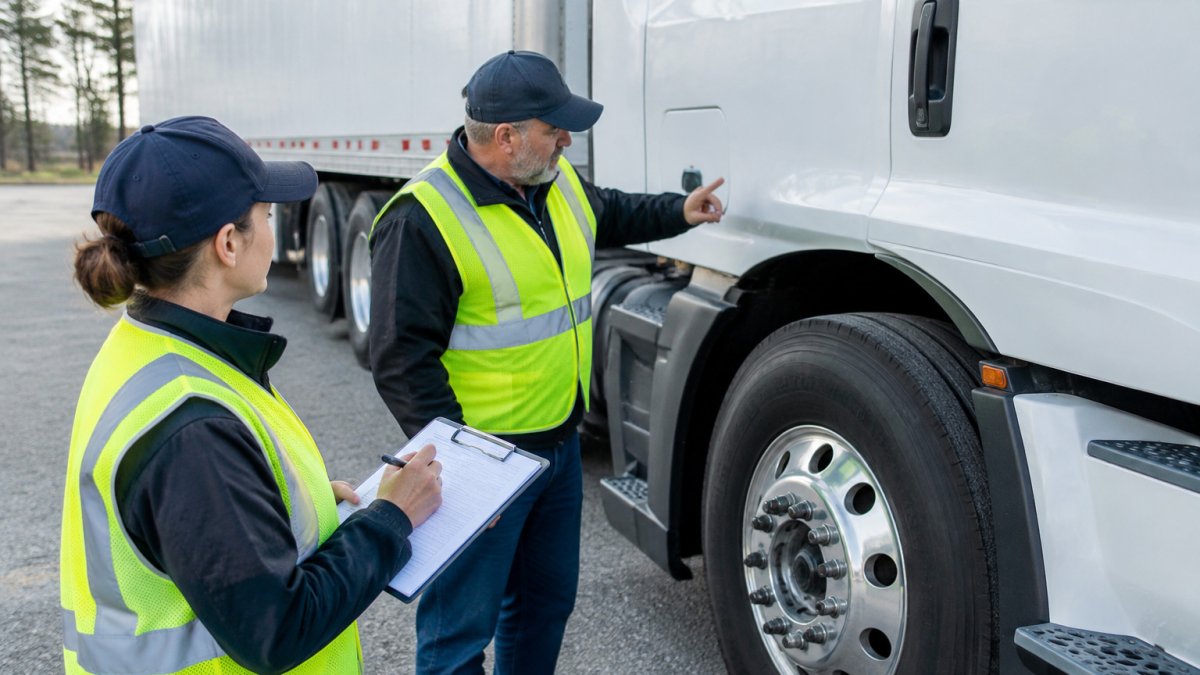
DOT compliance is the set of federal safety rules that govern commercial motor vehicles on public roads in the United States, enforced mainly by the FMCSA. It covers ongoing standards for drivers, vehicles, hours of service, and testing, not a once-a-year filing. Passing an inspection only shows a minimum standard was met that day.
- Whether DOT rules apply depends on the vehicle and how it operates, not on company size.
- Check GVWR on the door jamb, not the actual loaded weight, when judging thresholds.
- Drivers need a valid CDL and medical examiner’s certificate, plus a driver qualification file.
- Driver qualification files are living records with review cycles, not one-time hiring packets.
- Consistent DVIRs with real defects noted matter more than a perfect record of ‘all good’ entries.
Table of Contents
- What DOT Compliance Actually Means for a Commercial Vehicle Operation
- Which Commercial Vehicles and Carriers Must Comply
- DOT Compliance Requirements: Drivers, Vehicles, Hours, and Testing
- Commercial Vehicle Inspection Requirements and Driver Vehicle Inspection Reports
- The DOT Driver Qualification File: What Auditors Look For
- Common Misconceptions in Towing and Transport
- A DOT Compliance Checklist for Operational Readiness
- Getting Your Team Trained Before the Next Roadside Inspection
- Frequently Asked Questions
What DOT Compliance Actually Means for a Commercial Vehicle Operation
DOT compliance is the set of federal safety rules that govern commercial motor vehicles operating on public roads in the United States, enforced primarily by the Federal Motor Carrier Safety Administration (FMCSA).
Here’s the part many owners miss. Passing an inspection doesn’t necessarily mean your operation is safe. Compliance tells you that you met a minimum standard on a given day. Safety is what happens on the other 364 days, when nobody is checking.
Which Commercial Vehicles and Carriers Must Comply
This is the question that decides everything else, and it is where most operators get it wrong.
Start with the federal definition.
The general decision path looks like this:
- Is the vehicle used in interstate commerce? Crossing state lines is the obvious case, but interstate commerce also includes transporting goods that originated in or are destined for another state, even if the vehicle never leaves yours. If yes, federal FMCSA rules apply once a threshold below is met.
- Does the vehicle meet a weight or passenger threshold? Check the GVWR on the door jamb, not the actual loaded weight, and confirm the current federal threshold with FMCSA.
- Does it carry placarded hazardous materials? That pulls a vehicle into the rules at a lower weight threshold.
- Does the operation need a USDOT number and operating authority? A USDOT number is required for interstate commercial vehicles meeting the thresholds; operating authority is a separate registration for for-hire carriers.
- Is the operation intrastate only? Federal rules may not apply, but most states adopt comparable safety rules for intrastate carriers, often with their own weight thresholds and their own USDOT-style number. Verify with your state motor carrier agency, not just the federal site.
Watch out: the most common error is assuming a truck is exempt because it looks light. If you are weighing whether to handle these obligations with compliance software or outside consulting help, the comparison of DOT compliance software and consulting for towing fleets lays out the trade-offs.
For towing and recovery specifically, the analysis gets interesting. A light-duty wrecker running purely intrastate may fall outside federal rules but still be covered by state requirements. Heavier units often cross the federal line.
If you answered yes to any threshold question, assume DOT rules apply and verify the details against the FMCSA’s official guidance at fmcsa.dot.gov before making decisions. When in doubt, treat the stricter reading as the safe one.
DOT Compliance Requirements: Drivers, Vehicles, Hours, and Testing
DOT compliance rests on four pillars: the people driving, the equipment they drive, the hours they work, and the testing that keeps impaired drivers off the road. Each one has its own rules, and gaps in any of them show up quickly during a roadside inspection.
Driver Qualification and Commercial Driver License Rules
Drivers of qualifying commercial vehicles need the appropriate commercial driver’s license (CDL) and a valid medical examiner’s certificate. Once new drivers are qualified, practical safety training guidance for new drivers can help you prepare them for the road.
A common mistake is treating the CDL check as a one-time hiring step. Licenses expire, medical certificates lapse, and drivers pick up violations. For a practical walkthrough of setting up driver training from the ground up, see how small towing fleets can build safety training.
Hours of Service and Electronic Logging Devices
Hours-of-service rules limit how long drivers can operate before taking required rest breaks. Most carriers now track this with electronic logging devices (ELDs), which record duty status automatically.
Our honest take: an ELD fixes the recordkeeping, but it doesn’t fix the scheduling pressure that causes violations in the first place.
The four pillars of DOT compliance each carry their own rules, and gaps in any of them show up quickly during a roadside inspection.
| Pillar | What it covers | Where gaps show up |
|---|---|---|
| Drivers | CDL and medical examiner’s certificate | Licenses expire and violations accumulate |
| Vehicles | Safe operating condition and DVIRs | Defects never noted on DVIRs |
| Hours | Driving limits, on-duty windows, rest breaks | Dispatch pressure pushes drivers to the edge |
| Testing | Impairment checks, including drug and alcohol testing | Programs not active or randomly applied |
Commercial Vehicle Inspection Requirements and Driver Vehicle Inspection Reports
Vehicles must be kept in safe operating condition, and drivers are expected to inspect them before and after each trip. The driver vehicle inspection report (DVIR) is the record of those inspections.
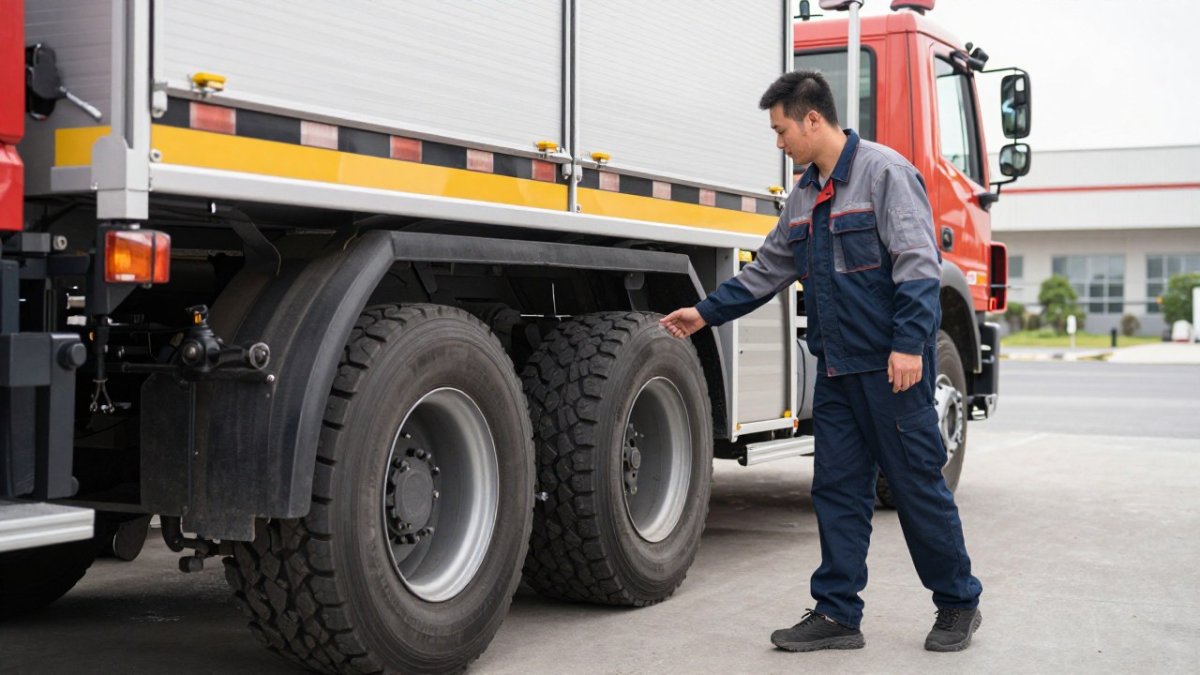
Operators should also keep maintenance records showing that preventive maintenance is actually performed, not just scheduled. During a roadside inspection, the inspector will compare what your records say with what’s on the truck.
The DOT Driver Qualification File: What Auditors Look For
The driver qualification file is where paperwork meets reality, and it is a common place small fleets get written up.
Here is the part that trips people up: the file is not a one-time hiring packet. It is a living record with review cycles.
A practical test we use: could you pull any driver’s file in under ten minutes and show every required document, current and signed? If not, the file needs work long before an auditor shows up. The audit is not the time to discover a missing medical card.
Watch out: a file that is complete but inconsistent is almost as bad as a missing file.
For small fleets and owner-operators with no dedicated safety department, assign one person to own the file and put the review dates on a calendar.
Common Misconceptions in Towing and Transport
Several myths come up repeatedly in our work with towing and transport companies:
- “We’re a small operation, so the rules don’t apply to us.” Size doesn’t determine applicability. Vehicle weight and interstate operation do.
- “Our experienced drivers don’t need to be retrained.” Years on the job don’t guarantee current procedures. Experience should be respected, but it still needs to be checked.
- “A clean inspection means we’re safe.” An inspection is a snapshot. Safety is a daily practice.
- “Buying compliance software handles compliance.” Software records what your people do. It can’t make them do the right thing.
We’ve been doing it this way for 40 years” doesn’t necessarily mean we’ve been doing it right for 40 years. Challenge the habits you inherited, including the ones you assume are fine.
A DOT Compliance Checklist for Operational Readiness
Use this checklist to test whether your operation is ready for an inspection and, more importantly, operating safely:
- USDOT number and operating authority are current and displayed as required
- Every CDL driver’s license and medical examiner’s certificate is valid
- Driver qualification files are complete and reviewed annually
- ELDs are installed, functioning, and monitored for hours-of-service violations
- Drivers complete pre-trip and post-trip DVIRs, with defects reported and repaired
- Preventive maintenance is performed on schedule and documented
- Drug and alcohol testing program is active, including random testing requirements
- Records are stored in a retrievable format and can be produced quickly
- Supervisors review whether dispatch practices are creating hours-of-service pressure
Treat this list as a starting point for a conversation with your team, not a box to tick and file away.
Getting Your Team Trained Before the Next Roadside Inspection
Paperwork proves someone completed a program. It doesn’t prove they can safely perform the job. That gap is where Scomac Associates LLC focuses its training, using hands-on instruction tailored to the equipment and conditions your drivers actually face.
For operators who want structured, skills-based recovery and operator education, we recommend reviewing our tow truck operator training program, and if you’re weighing what a formal course adds, our guide on reasons to enroll in a tow truck operator training course lays out the case.
Frequently Asked Questions
What does DOT compliance mean for commercial vehicles?
DOT compliance means a commercial vehicle and the company operating it meet the Federal Motor Carrier Safety Regulations enforced by the Federal Motor Carrier Safety Administration (FMCSA). Those rules cover who can drive, the condition of the vehicle, how long drivers can work, drug and alcohol testing, and the records a carrier must keep. Compliance is not a one-time certificate. It is an ongoing set of daily practices that show up in roadside inspections and audits, so the paperwork and the operation have to match.
Which commercial vehicles must follow FMCSA regulations?
Applicability depends on vehicle weight, passenger or cargo use, whether the operation crosses state lines, and whether hazardous materials are involved. Interstate operations generally fall under FMCSA rules, and many intrastate operations are covered by state rules that mirror them. Towing operators should check their gross vehicle weight rating, their routes, and the work they perform, because a company can be covered even when individual trucks look small. When the answer is unclear, confirm it with the FMCSA or your state agency before assuming you are exempt.
What are the main DOT compliance requirements for a commercial vehicle fleet?
The core DOT compliance requirements include a valid commercial driver license where required, driver qualification files, medical examiner certification, pre-employment and random drug and alcohol testing, hours-of-service limits with electronic logging devices where required, and vehicle inspection and maintenance with driver vehicle inspection reports. Carriers also need current operating authority and a DOT number where applicable. Missing one area can cause violations even when the others are in order.
What documents should commercial vehicle drivers carry?
Drivers should carry a valid commercial driver license, their medical examiner’s certificate when required, the vehicle registration and proof of insurance, and the records required for the trip, such as hours-of-service logs or electronic logging device information. Drivers operating under certain rules also carry the most recent driver vehicle inspection report. Having these documents in a usable form matters at a roadside inspection, because a missing document can lead to a violation even if the underlying paperwork exists back at the office.
What is included in a DOT compliance checklist?
A practical DOT compliance checklist covers driver qualification files, licensing and medical certificates, drug and alcohol testing records, hours-of-service and ELD compliance, pre-trip and post-trip inspections, maintenance records, accident registers, and operating authority documents. Review each item at a set interval and assign an owner for each one. A checklist is only useful when someone checks the files against the actual trucks and drivers, not just when it sits in a binder.
How often do commercial vehicles need inspections?
Federal rules require drivers to complete a pre-trip inspection and a post-trip inspection, with defects recorded on a driver vehicle inspection report. Carriers must also keep systematic maintenance and periodic inspection records. The exact frequency for periodic inspections depends on the vehicle type and the applicable rules, so confirm the current requirement with the FMCSA. Daily driver checks catch many problems early, but they do not replace a documented maintenance program.
What is the difference between DOT and FMCSA compliance?
DOT, the Department of Transportation, is the federal department that oversees transportation safety. FMCSA is one of its agencies and is responsible for the commercial motor vehicle safety rules most carriers deal with directly. In everyday use, people say DOT compliance to mean compliance with the FMCSA’s Federal Motor Carrier Safety Regulations. Some other DOT agencies also regulate specific areas, such as hazardous materials, so the right rule depends on what your operation does.
How do towing companies manage DOT compliance?
Towing companies usually manage DOT compliance by assigning one person to own the driver files, vehicle maintenance records, and hours-of-service oversight, then reviewing them on a schedule. Many companies find that the weak spot is not the rules themselves but the gap between the written policy and what happens on a night call with a short-staffed crew. Hands-on training that covers inspections, recovery equipment condition, and recordkeeping helps close that gap, and it keeps records usable if an incident leads to a review.
