Last Updated: November 22, 2026
Quick Summary
Hands-on towing safety training builds real ability through supervised repetition on actual equipment across four areas: hitching and load control, rigging and recovery, roadside scene safety, and equipment inspection. Trainees practice each task until consistent, then are scored against a written standard rather than attendance. Competence, not a certificate, is what protects your people.
- Trainees should hitch and unhitch until the sequence is automatic, with an instructor watching every rep.
- Fault injection drills plant common errors like an unlatched coupler for trainees to catch during pre-tow checks.
- Recovery training starts with planning: trainees brief anchor point, line angle, and stop condition before any pull.
- Score each skill as demonstrated without prompting, demonstrated with coaching, or not yet demonstrated.
- Schedule short drills on shift, quarterly practical checks, and triggered refreshers after near-misses or equipment changes.
Table of Contents
- Why Classroom Towing Safety Training Falls Short
- What Hands-On Towing Safety Training Must Cover
- Building a Tow Operator Training Program That Sticks
- The Towing Safety Training Checklist Every Instructor Needs
- Light Duty Tow Truck Training: Where Most New Operators Start
- Heavy Wrecker Training: Planning Before Power
- How to Evaluate Whether Training Actually Works
- Choosing Hands-On Towing Safety Training for Your Team
- Frequently Asked Questions
Why Classroom Towing Safety Training Falls Short
A certificate proves someone sat through a program. It doesn’t prove they can rig a load, read a scene, or make the right call at 2 a.m. on a shoulder with traffic blowing past.
The problem isn’t the material. It’s the delivery. Slides and videos teach recognition, not the muscle memory that shows up when a strap shifts or a wheel lift won’t seat.
- Reading about load distribution is not the same as feeling a load shift
- Watching a winching demo is not the same as running the line
- Answering a quiz question is not the same as deciding under pressure
If your team is weighing formats, our breakdown of hands-on versus online safety training covers where each one fits.
What Hands-On Towing Safety Training Must Cover
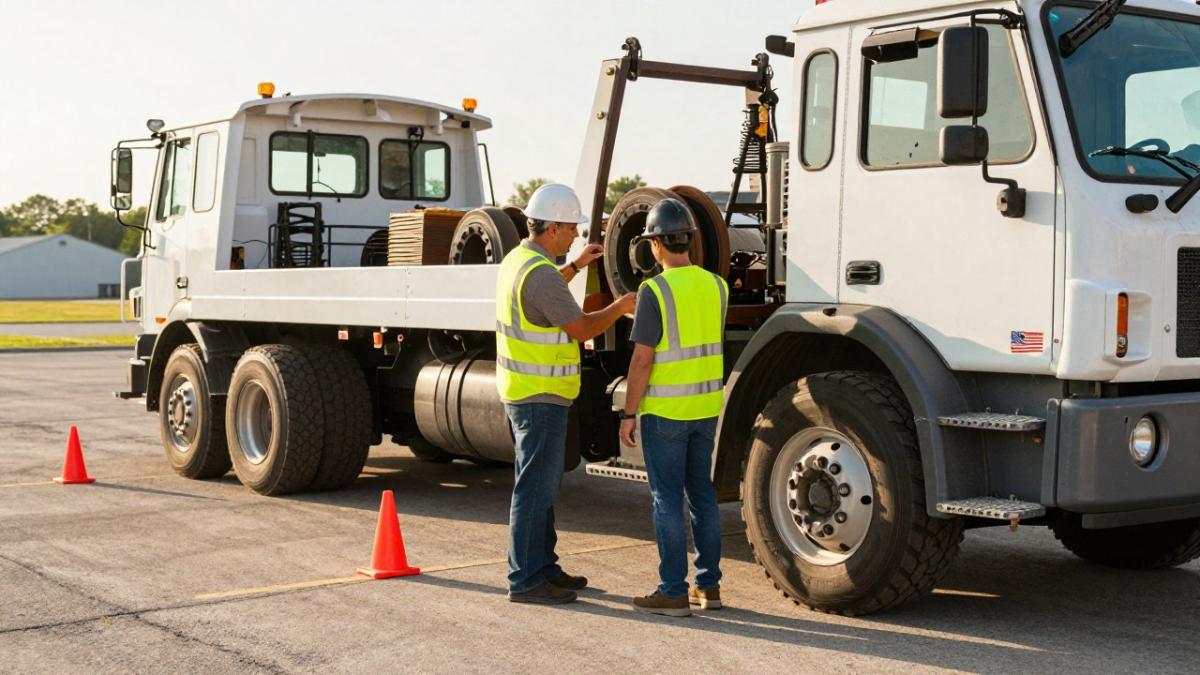
Hands-on towing safety training must build real ability across four areas: hitching and load control, rigging and recovery, roadside scene safety, and equipment inspection. Each needs repetition on actual equipment, with the exercise, the coaching point, and the standard the trainee must hit before moving on.
(/advanced-winch-and-rigging-safety-training/) is built around that idea.
Watch out: A trainee who can set up a clean pull on flat pavement may still freeze when the anchor point is questionable.
Roadside Scene Safety and Traffic Exposure
This is the block most programs under-practice and the one that matters most on a live shoulder. Trainees should set up and tear down a scene repeatedly, with the instructor playing passing traffic and a stressed customer.
Drill elements:
- Positioning the truck to protect the work area
- Cone placement and lighting for the road, weather, and time of day
- Exit and entry paths that keep the operator out of the traffic lane
Watch out: A trainee who sets a perfect cone pattern but stands in the lane while doing it has missed the point. Score where the operator’s body is, not just where the cones are.
Equipment Inspection and Operational Readiness
Inspection is a skill, not a form. Trainees should inspect the truck and gear they will actually run, then defend their findings to an instructor.
Drill elements:
- Pre-trip walk-around on the assigned truck
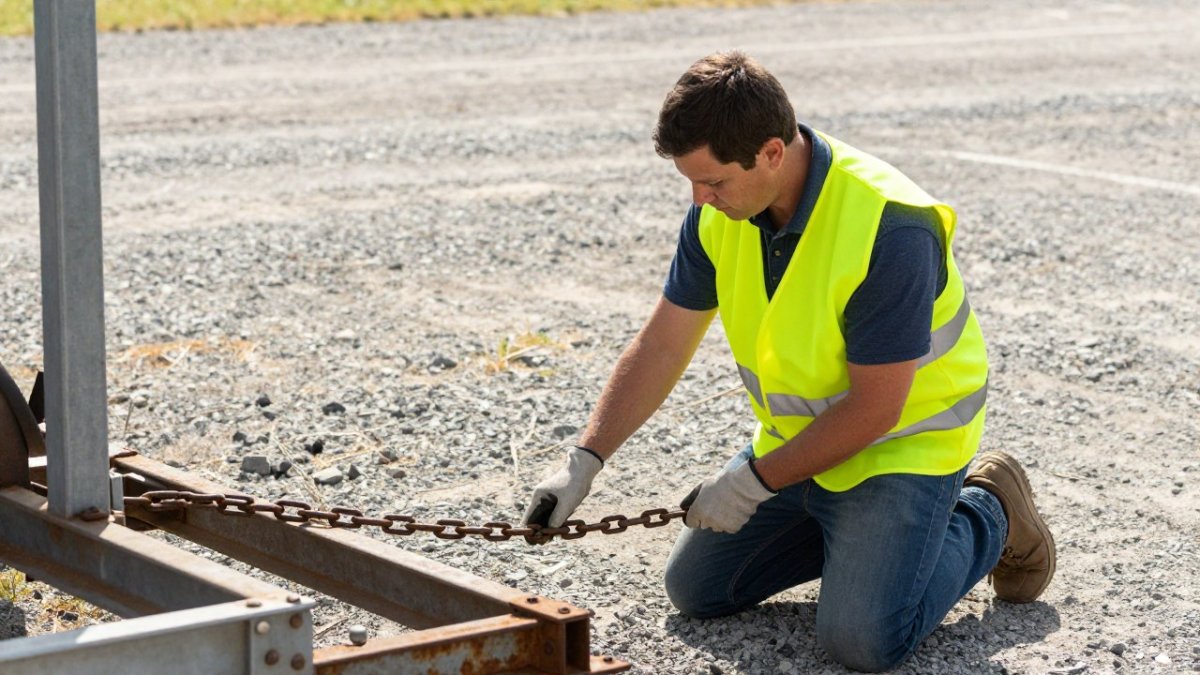
- Winch line, strap, chain, and rigging inspection against visible damage criteria
- Wheel lift, dollie, and control checks
Watch out: Trainees tend to inspect what they were taught to inspect and stop there. Rotate the focus each session so the whole truck gets covered over time, not just the same familiar parts.
Building a Tow Operator Training Program That Sticks
A program that sticks is short on lectures and long on repetition. Build it around what operators actually do on a shift, then test whether they can do it without prompting.
Start with a simple structure:
- Assess the baseline. Find out what each operator can already do.
- Set the standard. Define what “competent” looks like for each task.
- Demonstrate. An instructor shows the correct method on real equipment.
- Practice. Operators repeat the task until it’s consistent.
- Assess. Score performance against the standard, not attendance.
- Refresh. Schedule return training so skills don’t fade.
What most guides miss is step five. Completion is easy to document. Competence is the part that protects your people.
For mixed crews, split the room. New hires need fundamentals. Experienced hands need refreshers and a push past old habits.
The Towing Safety Training Checklist Every Instructor Needs
Use this checklist to judge any program before you commit to it. If an instructor can’t answer these, keep looking.
- Does the course use your equipment, or generic demo units?
- Is there supervised practice time on each core task?
- Are instructors experienced operators, not just presenters?
A certificate proves someone completed a program. It doesn’t automatically prove they can safely perform the job. The checklist above is how you tell the difference.
Light Duty Tow Truck Training: Where Most New Operators Start
Light-duty work is the entry point, and where bad habits form fastest. New operators learn wheel lift setup, controls, and maneuvering before they ever touch a heavy wrecker.
Focus new operators on:
- Pre-trip inspection and equipment checks
- Wheel lift and dollie setup
- Backing, turning, and maneuvering in tight lots
The tow truck operator training path is built for this stage, with hands-on reps on the equipment new hires will actually run.
Heavy Wrecker Training: Planning Before Power
A heavy wrecker can move almost anything. That’s exactly why training has to start with judgment, not horsepower.
Heavy recovery rewards operators who plan. Before a single line goes tight, the crew should know the weight, the terrain, the anchor points, and the exit.
What heavy training should stress:
- Reading the scene and estimating load and forces
- Choosing anchor points and rigging that match the rating
- Understanding the limits of the truck and the operator
Passing an inspection doesn’t necessarily mean an operation is safe. The same holds for a big truck.
How to Evaluate Whether Training Actually Works
Training works when operators perform better on the job, not just in the classroom. Measure it with observation, not paperwork. Most programs stop at completion. The fix is to score skills against criteria an instructor can see and a supervisor can repeat later.
Score the Task, Not the Attendance
For each core skill, write down what “competent” looks like in observable terms. Then have an instructor score the operator against it.
Examples of observable criteria:
- Hitching and coupling: Completes the full sequence in order, performs the walk-around without prompting, and catches a planted fault during a re-check.
- Load securement: Selects tie-down points and spacing that match the load, explains the rating behind each choice, and identifies an under-secured load when shown one.
- Backing and maneuvering: Places the truck and trailer in the target zone without a spotter correction beyond the agreed signals, and stops when sightlines are lost.
A useful pattern is a three-level score: demonstrated without prompting, demonstrated with coaching, and not yet demonstrated. Only the first counts as competent for solo work.
Watch out: Scoring drifts when the same instructor both teaches and grades without a written standard.
Measure on the Job, Not Just in the Lot
A pass in the training lot is the starting line, not the finish. In the weeks after training, watch for fewer avoidable incidents and near-misses, operators who can explain why a method works, consistent procedure across shifts, calmer decisions on scene, and new hires who ramp up without hand-holding.
Run short practical assessments a few months after training, using the same criteria the instructor scored. If skills slipped, that is your signal to refresh. Skill retention fades without use, and a one-time class will not hold the line forever.
Build a Refresher and Drill Schedule
Competence decays quietly. The operator who nailed a wheel lift in March may be rusty by fall if the work has been light. A practical schedule keeps skills alive without pulling the crew off the road for a full course every time:
- Short drills on shift. Ten minutes on a coupling sequence or a scene setup before the truck rolls.
- Quarterly practical checks. Re-score one or two core skills against the written criteria.
- Full refresher on a set interval. Bring the crew back for a longer session, and use the drill results to decide what to focus on.
This is also where experienced operators get value. Years on the job do not automatically guarantee that someone is using current or appropriate procedures. A drill schedule respects their experience while giving them a reason to sharpen the parts that have gone stale.
Tie It Back to the Business
The point of all this scoring is not paperwork. It is knowing which operators can be trusted alone on a scene, which need more reps, and where the next session should focus. That is a management decision, and it needs real evidence behind it. Passing an inspection doesn’t necessarily mean an operation is safe.
A three-level score keeps evaluation honest and repeatable across instructors.
| Score level | What it means | Counts as competent for solo work |
|---|---|---|
| Demonstrated without prompting | Performs task unprompted | Yes |
| Demonstrated with coaching | Needs instructor guidance | No |
| Not yet demonstrated | Not ready | No |
Choosing Hands-On Towing Safety Training for Your Team
Pick a provider the way you’d pick an operator: look at what they can actually do.
Questions worth asking:
- Who teaches the course, and where did they work?
- How much of the day is practice versus lecture?
- Can the program match your equipment and operations?
At Scomac Associates LLC, we focus on hands-on, real-world instruction and help management turn training into daily practice.
You can review towing safety training options or check upcoming training classes and events to find a session that fits your crew.
The hard truth is that most towing incidents trace back to a decision, not a broken part.
Frequently Asked Questions
What should hands-on towing safety training cover?
It should cover the tasks operators actually perform: pre-trip inspections, hitching and coupling, load distribution and weight ratings, rigging and recovery setup, braking and maneuvering with a load, and roadside scene safety. Every item should be practiced on real equipment with an instructor watching, not just described in a classroom.
How often should tow operators receive safety training?
New operators need structured training before working independently, and everyone benefits from refresher sessions at a regular interval. Equipment changes, new recovery techniques, and near-miss reviews are all reasons to schedule additional training. Years on the job do not guarantee current procedures; an operator who has done it one way for 20 years may still be using an outdated method. Build refreshers into your annual calendar rather than waiting for an incident to prompt one.
How can employers tell whether a tow operator is ready to work independently?
Watch them perform the job. A skills assessment on real equipment, covering hitching, rigging, load securement, and scene setup, tells you more than a written exam or a certificate. Have an experienced supervisor observe and document each task. If the operator cannot explain why a step matters, they are not ready. Competency is demonstrated, not assumed, and the assessment should be repeated as equipment and conditions change.
What is the difference between light duty tow truck training and heavy wrecker training?
Light duty training focuses on wheel lifts, car carriers, and the maneuvering skills new operators use daily. Heavy wrecker training adds recovery planning, rigging under higher loads, and decision-making about when a recovery exceeds the equipment or the operator’s experience. The two should not be treated as one course with a bigger truck. Separate programs let you match instruction to the equipment each operator actually runs.
