
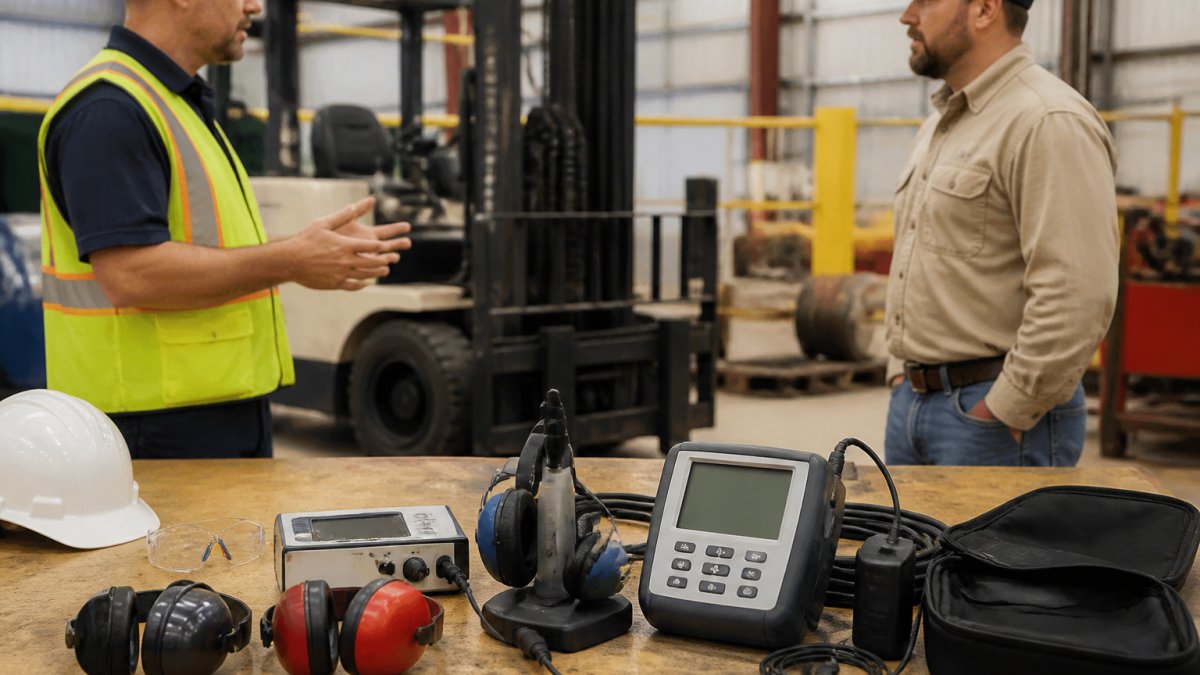
Last Updated: October 28, 2026
Quick Summary
Examinetics alternatives for industry include providers named in industry listings such as Anadyne, Concentra, Labcorp, and Aegis Sciences. Public information on their hearing testing services is limited, so employers should compare delivery model, coverage, reporting format, and follow-up in writing before choosing.
- Score each provider on delivery model, calibration documentation, reporting format, follow-up process, and industry fit.
- Anadyne is described as offering mobile testing, but its listed service area is the Pacific Northwest.
- Public sources do not detail Concentra, Labcorp, or Aegis Sciences hearing testing services, so verify them directly.
- Request a complete export of historical audiograms before switching providers to protect baseline comparisons.
- Employers keep OSHA hearing conservation obligations under 29 CFR 1910.95 even when an outside provider does the testing.
Table of Contents
- Why Employers Look Beyond Examinetics
- What an Industrial Hearing Testing Provider Should Cover
- OSHA Hearing Conservation Program Requirements You Still Own
- Mobile Hearing Testing for Employees on Multiple Shifts
- Providers Named as Examinetics Competitors: What the Research Shows
- Managing the Hearing Conservation Program Across Providers
- Scoping Your Next Step: Training and Program Review with Scomac
- Frequently Asked Questions
Why Employers Look Beyond Examinetics
Many employers reviewing their hearing testing program begin by asking whether their current provider still fits their workforce. The reasons tend to be practical: scheduling, location, and how results are documented and reported.
Examinetics is one option among several. Employers who evaluate examinetics alternatives typically want a provider that matches their shift patterns, site locations, and recordkeeping needs. The comparison below looks at fit rather than price alone.
What an Industrial Hearing Testing Provider Should Cover
Most provider comparison pages list the same handful of features. The more useful exercise is to score each candidate against the criteria that actually drive program risk: how testing is delivered, how results are documented, how follow-up is triggered, and how the provider supports the employer’s own OSHA obligations.
Service delivery model
- On-site mobile testing. A mobile unit or portable booth visits the plant. Best for multi-shift operations and distributed sites where off-site travel would pull employees off the line.
- Clinic-based testing. Employees travel to a fixed location. Workable for single-site employers near a clinic, but harder to schedule around shifts.
- Hybrid. Mobile units for routine annual testing, clinic visits for new hires or retests. Common in organizations with mixed site sizes.
Ask each provider how they handle employees who miss a scheduled test, how far in advance routes are set, and whether they can add a site mid-cycle.
Audiometric testing and equipment
Confirm that testing follows the calibration and testing-environment requirements in 29 CFR 1910.95 Appendix B (audiometer calibration) and Appendix C (audiometric measuring instruments), and that the provider can produce calibration records on request. Ask who performs the test, what training and oversight that person receives, and how the provider handles a test that needs to be redone.
Noise assessment and hearing protection support
Testing alone does not satisfy the standard. Employers also need noise monitoring to identify exposed workers and a hearing protection program with proper selection, fitting, and training. Ask whether the provider offers noise dosimetry or area monitoring, whether they help select hearing protectors by attenuation rating, and whether they deliver the annual training required under 1910.95(k) or leave that to the employer.
Reporting and recordkeeping
- How are baseline and annual audiograms delivered, paper, portal, or both?
- Can the employer export records in a format that survives a provider change?
- How are standard threshold shifts flagged, and who is notified?
- Are records retained in a way that supports the employer’s 1910.95(m) retention obligations?
Follow-up and referral
Audiograms that show a standard threshold shift or suggest a medical issue require follow-up. Ask how the provider communicates results to employees, whether a physician or audiologist reviews problem audiograms, and how referrals are documented.
Industry-specific selection criteria
The right provider depends heavily on the workforce:
- Manufacturing. Fixed sites, multiple shifts, and steady headcount favor on-site mobile testing on a predictable annual schedule.
- Construction. Crews move between job sites, so geographic coverage and the ability to test at temporary locations matter more than a single-site schedule.
- Energy and utilities. Remote sites and rotating crews make route flexibility and short-notice scheduling important.
- Transportation and distribution. High turnover means frequent new-hire baselines; ask how quickly a new employee can be tested.
- Towing and emergency response. Small, dispersed teams often need clinic-based options or shared mobile routes.
Program management and support
Ask whether the provider offers a named account contact, how scheduling changes are handled, and whether they can support a written hearing conservation program or only the testing component. Employers who want help with the program itself, policy, training, documentation, should look for a provider or consultant that covers both.
Score each candidate on delivery model, calibration documentation, reporting format, follow-up process, and industry fit before comparing anything else. A provider that excels at testing but leaves reporting and follow-up to the employer may cost more program time than it saves.
OSHA Hearing Conservation Program Requirements You Still Own
Using an outside provider does not transfer your obligations. Under OSHA’s occupational noise standard at 29 CFR 1910.95, employers whose workers are exposed to noise at or above an 8-hour time-weighted average of 85 decibels must administer a hearing conservation program. That program includes monitoring, audiometric testing, hearing protection, training, and recordkeeping.
Some requirements apply regardless of who performs the testing. Confirm with any provider that baseline and annual audiometric tests are documented in a form you can produce during an inspection. Review the standard directly at osha.gov, since requirements depend on noise exposure levels at your facility.
Mobile Hearing Testing for Employees on Multiple Shifts
Multiple shifts make scheduling the main challenge. Mobile testing can bring a booth to the plant so employees test during their shift rather than traveling off-site. Ask whether a provider can visit each location on a set schedule and how it handles employees who miss their appointment.
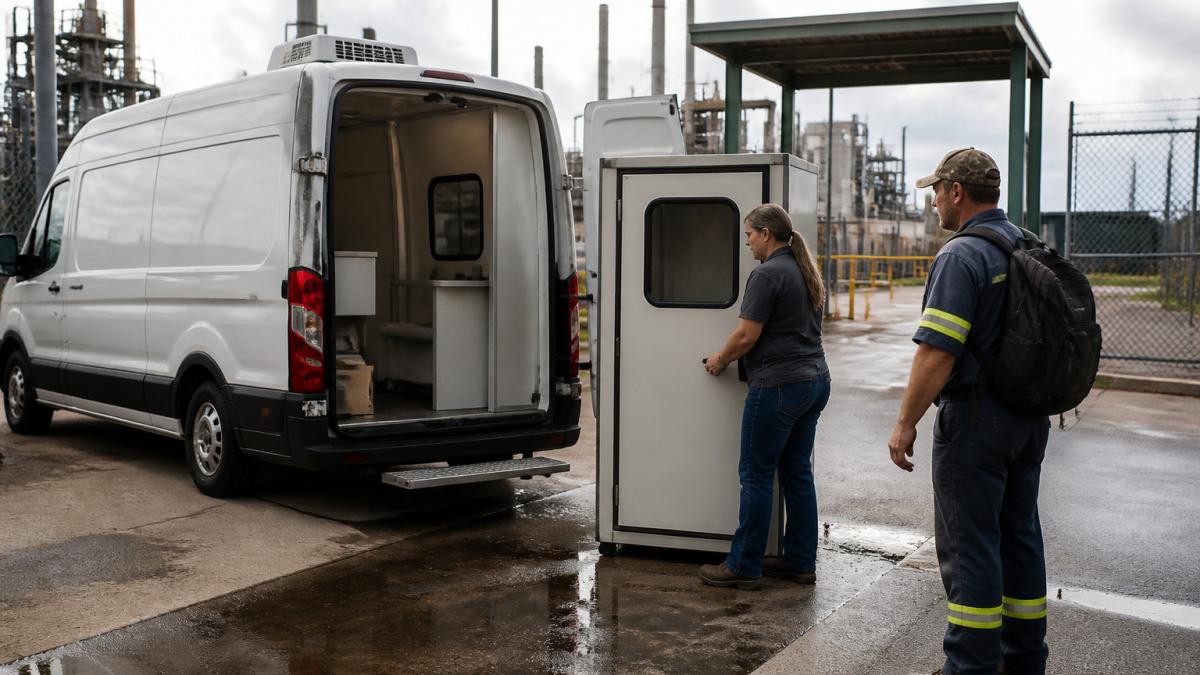
Mobile service also raises questions about booth calibration, technician credentials, and how results return to your records. Put these questions to every provider before you commit.
Providers Named as Examinetics Competitors: What the Research Shows
Industry directories and comparison pages list several providers as Examinetics competitors, but the public information on these examinetics alternatives is uneven. The descriptions below reflect only what could be verified from public sources. Confirm current service area, testing capabilities, reporting format, and pricing directly with each provider before making a decision.
Anadyne
Anadyne is described in industry listings as offering mobile hearing testing as an alternative to Examinetics. The source identifies its service area as the Pacific Northwest, so employers outside that region should confirm coverage before considering it. Pricing is not listed publicly and must be requested directly.
Best fit: organizations in its stated service area that need mobile testing and prefer a regional provider.
Concentra, Labcorp, and Aegis Sciences
Concentra, Labcorp, and Aegis Sciences Corporation are each named among Examinetics competitors in industry listings. The public sources do not detail their occupational hearing testing services, mobile availability, reporting formats, or pricing. Treat them as candidates to verify, not as confirmed fits.
Best fit: employers who want a broader list of national providers to contact for quotes and service details, particularly where occupational health services beyond hearing testing are also needed.
How to compare candidates side by side
Because public information is thin, the comparison has to happen during the sales conversation. Use the same questions with every provider so the answers are comparable:
| Comparison area | What to ask |
|---|---|
| Service delivery | On-site mobile, clinic-based, or hybrid? How are routes scheduled? |
| Geographic coverage | Which states and metro areas are served? Any minimum headcount per visit? |
| Testing scope | Audiometric testing only, or noise monitoring and hearing protection support as well? |
| Reporting | Portal, paper, or both? Can records be exported? |
| Follow-up | Who reviews problem audiograms? How are referrals documented? |
| Program support | Do they help write or maintain the hearing conservation program, or only test? |
| Implementation | How long from contract to first test? Who coordinates site logistics? |
Implementation, migration, and continuity of records
Switching providers is where programs most often lose data. Before signing with a new provider:
- Request a complete export of historical audiograms from the current provider, including baseline dates and any standard threshold shift notations.
- Confirm the new provider can ingest prior records so the next annual test is compared against the correct baseline.
- Map the schedule for each site and shift before the first visit, including new-hire testing and retest windows.
- Identify a single internal owner for scheduling, records, and follow-up so nothing falls between departments.
- Test the reporting workflow on the first visit, confirm results arrive in the format the employer can actually file and retrieve.
A common pattern is for employers to keep a master spreadsheet or database of every audiogram independent of the provider, so a future change does not depend on any single vendor’s portal.
What the research does not tell you
Public listings do not establish which provider is best for a given workforce. They also do not confirm pricing, contract terms, or service quality. The only reliable comparison is a structured conversation with each candidate using the same criteria, followed by a review of sample reports and a check of references from employers with similar operations.
Do not assume that a provider listed as an Examinetics competitor offers the same scope. Some focus on testing only; others bundle occupational health services. Confirm scope in writing before comparing quotes.
Managing the Hearing Conservation Program Across Providers
If you use more than one provider, or change providers, keep one master record of every audiometric test, its date, and the employee it covers. Consistent records make annual comparisons possible and simplify any regulatory review.
Set a single owner for the program so results, notifications, and follow-up do not fall between departments.
Scoping Your Next Step: Training and Program Review with Scomac
Tow Truck Operator Training and Workplace Operator Safety Training cover the training side, To learn more about the company before engaging, visit the Scomac Associates LLC about us page. For a related look at preventing violations in industrial settings, read OSHA violation prevention for industrial firms.
Contact Scomac Associates LLC to request a program review or to discuss customized employee training. You can review the full list of training certification courses to see which options match your workforce.
Frequently Asked Questions
What services does Examinetics provide?
The research supplied for this article does not verify Examinetics’ complete service list, so confirm current offerings directly with the provider. When comparing alternatives, ask each vendor for a written description of its services, site availability, and reports.
Can an employer use a different provider for OSHA hearing conservation testing?
Review the current text of 29 CFR 1910.95 and consult the official OSHA source to determine the requirements that apply to your workplace and any contracted testing arrangement.
What is the difference between mobile audiometric testing and tablet-based hearing testing?
Ask any provider to explain its testing method and how it documents that the method meets the requirements applicable to your hearing conservation program.
What should employers look for in an audiometric testing provider?
Start with service fit: confirm the provider can reach the sites and shifts you operate. Ask about recordkeeping, reporting, and follow-up referrals. Ask the provider to explain its personnel qualifications and program support, and request a quote directly.
