Quick Summary
Workplace safety consulting ranges from one-time hazard audits to ongoing safety program management, and most providers specialize. Before comparing firms, decide whether you need an audit, a written program, hands-on training, or ongoing support.
- Decide whether you need an audit, written program, hands-on training, or ongoing support before comparing providers.
- Pricing is unpublished for most providers, so ask each one for cost directly.
- The OSHA On-Site Consultation Program is free but typically ends with a report rather than ongoing support.
- Ask each provider for a sample scope of work and the findings they report back.
- A certificate proves course completion, not the ability to perform the job, so ask about field experience.
Table of Contents
- Side-by-Side Comparison of Workplace Safety Consulting Providers
- Safety Consulting Services: What a Real Engagement Should Include
- Free Workplace Safety Consulting: What You Get and What You Don’t
- Workplace Safety Consulting Certification: What It Proves and What It Doesn’t
- Safety Consulting Companies: Matching the Provider to Your Operation
- Choosing Your Next Step With a Safety Consultant
- Frequently Asked Questions
Workplace safety consulting covers many services, from one-time hazard audits to ongoing safety program management. Choosing among them is hard because the offers look similar on paper. This guide compares several providers so you can match a consultant to what your operation actually needs.
Most buyers start with a compliance problem: a citation, an upcoming inspection, a fleet that keeps generating incidents. The instinct is to hire whoever answers the phone first. That usually costs more later. A consultant who understands towing or industrial work will spot different hazards than one who mostly audits office environments.
Before you compare anyone, decide what you are buying. Is it an audit, a written program, hands-on training, or ongoing support? Providers that do all four exist, but most specialize. Knowing your gap makes the comparison far simpler.
Side-by-Side Comparison of Workplace Safety Consulting Providers
Several providers appear across the research, but they differ sharply in scope. The table below summarizes what each one publicly describes. Pricing is not published for most, so treat cost as a question to ask directly. For a practical walkthrough of how an operational safety audit is run at an industrial site, read that guide before you compare what each provider would actually do.

| Provider | Core Offer | Public Pricing | Best For |
|---|---|---|---|
| Scomac Associates LLC | Hands-on training and policy development for towing and industrial operations | Not published; request a quote | Towing, emergency response, and industrial teams |
| OSHA On-Site Consultation Program | Free on-site hazard identification | Free | Small and medium employers with limited budgets |
| J. J. Keller Health & Safety Consulting | Consultants plus compliance programs | Contact for pricing | Firms wanting consulting tied to compliance programs |
| NSC Consulting and Assessments | Data-driven assessments and proactive safety systems | Contact for pricing | Organizations building long-term safety systems |
| Occupros Safety Consulting | Audits, mock inspections, written programs, citation response | Contact for pricing | Employers who need audits and citation support together |
Free government consultation stands apart because it costs nothing, but its scope is limited to identifying hazards and recommending fixes. Scomac focuses on closing the gap between a written policy and what happens on the job.
We would not pick a provider on table rows alone. Ask each one for a sample scope of work and see which findings they report back.
Safety Consulting Services: What a Real Engagement Should Include
A real engagement does more than hand over a checklist. If you want to see the service offering a consultant can actually book, review the Safety Consulting service options before comparing proposals. The difference between a consultant who helps and one who just bills hours usually comes down to whether they watch work being performed or only read about it.
Here is what a credible scope of work typically contains, and why each piece matters operationally:
- Hazard assessment tied to real tasks. Not a generic checklist, but job hazard analyses built around the tasks your people perform. For a tow operation that means separate JHAs for light-duty service calls, medium-duty recovery, and heavy-duty rotator work, because the exposure profile is different for each. For an industrial site it means JHAs per work cell, not per department.
- Written programs that match your equipment and crews. A hazard communication program, lockout/tagout procedure, or respiratory protection program has to reflect the actual chemicals, energy sources, and equipment on your site. Off-the-shelf templates are a starting point, not a deliverable. Ask whether the consultant will tailor the written program to your specific equipment ratings and procedures or hand you a binder.
- Corrective action plan with owners and dates. Findings without assigned responsibility and a target date tend to sit. A useful report lists each finding, the hazard it creates, a recommended fix, who owns it, and when it should close. That structure is what lets you track progress after the consultant leaves.
- Training that verifies ability, not attendance. If training is in scope, ask whether it is hands-on or classroom-only. A written procedure no one can perform under pressure protects no one. For towing and recovery work in particular, structured operator education through organizations like ERSCA (https://ersca.org/) emphasizes practical instruction and equipment familiarity, the kind of training that shows whether an operator can actually rig and recover safely, not just pass a quiz.
- Implementation support. Recommendations are cheap. Ask whether the consultant will help install the changes, revise the procedure, walk the crew through the new step, observe the first few executions, and adjust. That follow-through is where most safety programs either take hold or quietly die.
- Verification and follow-up. A single visit is a snapshot. Ask whether the engagement includes a return visit or a defined check-in to confirm corrective actions closed and the new procedures stuck.
Watch out: a proposal that lists deliverables but never names who on your staff will be involved, how findings will be prioritized, or what happens after the report is delivered is usually a document-production engagement, not a safety improvement one.
One more operational point: scope should match your actual risk profile. A small fleet with five power units and one yard does not need the same engagement as a multi-site industrial employer with a dozen written programs to maintain. Overbuying scope wastes money; underbuying leaves the real hazards unaddressed.
Free Workplace Safety Consulting: What You Get and What You Don’t
The OSHA On-Site Consultation Program is the main free option in the research. It gives employers a no-cost look at workplace hazards and practical improvement advice. What you get is a real assessment from qualified staff, delivered without any enforcement penalty for correctly addressed hazards.
What you don’t get is ongoing support. Free consultation typically ends with a report. Writing detailed programs, training crews across shifts, and managing corrective actions over months generally fall outside it. Plan for that gap. Many employers use the free visit to find problems, then hire a paid consultant to fix the ones that need sustained work.
Eligibility and scope details vary, so confirm them directly with the program before counting on them.
Workplace Safety Consulting Certification: What It Proves and What It Doesn’t
Many buyers ask whether a consultant holds a certification. To see how incident defensibility depends on documentation and training rather than credentials alone, read about towing company incident defensibility strategies. It is a reasonable question, but it is the wrong first question.
That does not mean credentials are worthless. It means you need to know what you are looking at. A few things worth understanding before you weigh a certificate in a hiring decision:
- Who issued it, and what did it require? Credentials vary widely in what they demand, some require documented field experience and a proctored exam, others are earned through an online course and a multiple-choice test. Ask the consultant to describe the requirements behind their credential. A credential that required supervised field hours tells you more than one that required a login.
- What does it cover? A general safety credential covers general industry. It may say nothing about towing, recovery, heavy equipment, or roadside traffic exposure. If your operation is a recovery fleet, a credential built around office and light-industrial environments leaves most of your real hazards unaddressed. Industry-specific experience matters at least as much as a general credential.
- How recently has it been applied? A credential earned a decade ago and never used in the field is a historical fact, not a current capability. Ask what the consultant has done recently in operations like yours.
- What is the consultant’s actual field history? This is the question that separates the useful consultants from the impressive resumes. Ask for examples of problems they solved in operations similar to yours, not client names, but the shape of the problem and how they approached it. A consultant who has worked recovery scenes will talk about traffic exposure, rigging angles, and equipment limitations in a way a generalist cannot fake.
Watch out: some credentials are marketed heavily and sound authoritative without requiring meaningful field experience. Before you treat a certificate as a proxy for competence, ask what it took to earn it and whether the issuing body required documented work in the field.
For towing and recovery operations specifically, structured operator education and instructor development through organizations like ERSCA (https://ersca.org/) reflect a training philosophy built around practical instruction and equipment familiarity.
Safety Consulting Companies: Matching the Provider to Your Operation
Match the provider to the operation, not the marketing. Operators seeking hands-on instruction can review operator safety training for tow truck, forklift, and MEWP operators at Scomac Associates LLC. Here is how to think about the options:
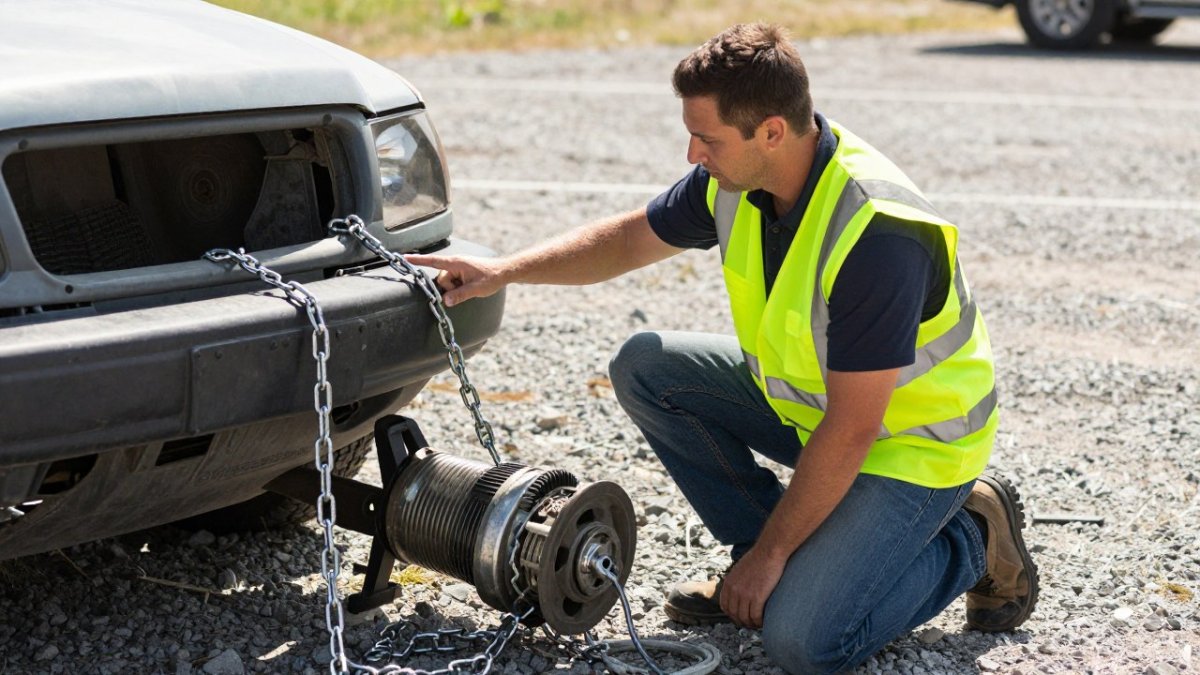
- Tow and recovery companies: Look for providers with towing or heavy-equipment experience. Hands-on operator training in winching, rigging, and roadside work fits teams that need practical instruction.
- Industrial and construction firms: Look for providers that offer audit and compliance-program support, which suits multi-site employers managing many written procedures.
- Small operations on a tight budget: Start with the OSHA On-Site Consultation Program, then decide whether you need paid help for follow-through.
- Organizations building long-term systems: Look for providers with data-driven approaches if you want to measure safety performance over time.
If you run a small fleet and wonder whether a provider will take you on, ask directly. Smaller operations often get less attention from large firms, so confirm who will actually visit your site.
Choosing Your Next Step With a Safety Consultant
Start with a short list of two or three providers that match your operation. Request a scope of work from each, and ask for the same deliverables so the proposals compare cleanly. Check whether each includes an on-site visit, hands-on training, and help with corrective actions.
Then test the answers. A provider that cannot describe how they would handle one of your real hazards is telling you something. A provider that asks detailed questions about your equipment, crews, and past incidents is usually the one that will do the work.
If towing, recovery, or industrial operator training is what you need, Scomac Associates LLC can walk you through how its hands-on programs are structured. Visit the website to discuss your operation and request a quote.
Frequently Asked Questions
What does a workplace safety consultant do?
A workplace safety consultant looks at how work actually gets done, not just how the written program says it should. That usually means walking the site or yard, reviewing job hazard analyses, checking equipment and training records, and talking with the people doing the work. A good consultant then turns findings into specific, realistic changes your supervisors can carry out. The value shows up in fewer preventable incidents and a program your crews actually follow.
Can small towing companies get free workplace safety consulting?
Yes, in some cases. OSHA’s On-Site Consultation Program offers no-cost consultation to eligible small and medium-sized employers, and it is separate from enforcement, so a consultation visit does not lead to citations. Eligibility rules and the scope of services apply, so confirm them directly with the program. Private firms usually charge for their work, and pricing depends on the size of your operation, the number of sites, and the services you need.
What should a workplace safety consulting engagement include?
At minimum, expect a site or operational assessment, a review of your written programs against what you actually do, hazard analysis for your specific tasks, and clear recommendations you can act on. Strong engagements also include follow-through: help implementing changes and a way to check whether they held. Be cautious with any provider that offers a generic package without asking about your equipment, schedules, or crew experience levels.
Does a safety consulting certification mean a consultant is qualified?
A certification shows that a person completed a course or passed an exam. It does not automatically show they can assess your operation or make it safer. Ask about field experience in your industry, who will actually visit your sites, and whether the consultant has worked with towing or fleet operations before. Experience and references tell you more than a credential alone.
