
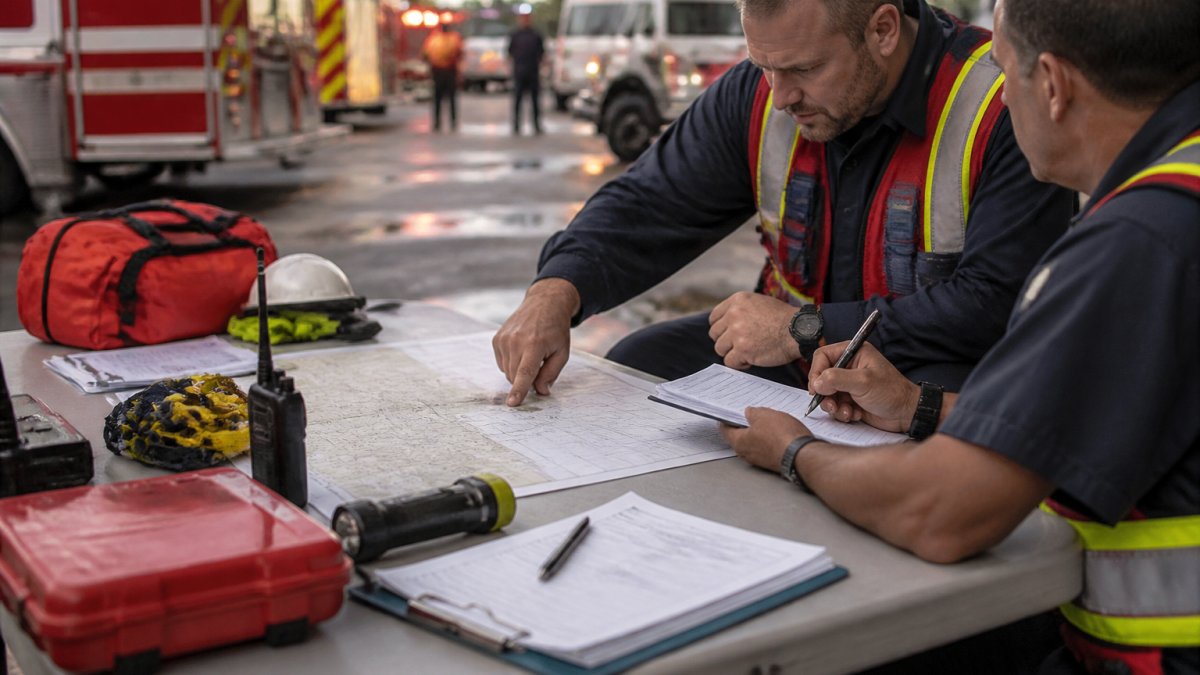
Table of Contents
- Why Emergency Response Risk Management Plans Matter for Operations
- Risk Identification and Emergency Preparedness Risk Assessment
- Building an Emergency Response Plan Template
- Emergency Response Training for Your Team
- Testing and Emergency Response Exercise Evaluation
- Risk Mitigation and Continuous Improvement
- Common Mistakes in Emergency Response Planning
- Frequently Asked Questions
Last Updated: October 21, 2026
Why Emergency Response Risk Management Plans Matter for Operations
An emergency response risk management plan is a structured approach to identifying potential hazards, assessing their likelihood and impact, and establishing procedures to prevent incidents or minimize consequences when they occur.
The difference between a business that survives a critical incident and one that doesn’t often comes down to preparation.
At Scomac Associates LLC, we work with operations managers, fleet supervisors, and safety directors who understand that a written safety manual sitting in a drawer doesn’t protect anyone.
Risk Identification and Emergency Preparedness Risk Assessment
The foundation of any emergency response risk management effort is knowing what can actually go wrong in your specific operation. This isn’t about listing every theoretical hazard, it’s about identifying the scenarios that pose real risk to your people and your business.
Hazard Identification Methods
Start by walking the job site or facility with people who work there every day. A shop supervisor knows where compressed air lines run. A driver knows which routes have the worst weather exposure. A dispatcher understands call patterns and seasonal surges. Their experience matters more than a generic checklist.
Document what you find:
- Equipment failures and mechanical breakdowns
- Environmental hazards (weather, terrain, traffic patterns)
- Human factors (fatigue, communication breakdowns, skill gaps)
- Resource constraints (staffing, equipment availability, response time limitations)
- Interactions with other organizations (contractors, public agencies, neighboring operations)
Review incident history. If your operation has experienced near-misses or actual incidents, those are your highest-priority risks. They’ve already happened once; they’ll likely happen again unless something changes.
Risk Evaluation and Prioritization
Not all hazards deserve equal attention. A risk that’s unlikely but catastrophic demands different controls than a risk that’s frequent but minor.
Evaluate each identified hazard on two dimensions:
Likelihood: How often might this occur? Weekly? Annually? Once per decade?
Consequence: If it happens, what’s the worst realistic outcome? Minor injury? Fatality? Business interruption?
A simple matrix helps prioritize:
| Likelihood | Minor Impact | Serious Impact | Catastrophic |
|---|---|---|---|
| Frequent | Address in procedures | High priority | Critical priority |
| Occasional | Standard controls | High priority | Critical priority |
| Rare | Document | Medium priority | High priority |
Focus your emergency response training and resources on the high and critical priority risks. That’s where your plan will have the most impact.
Building an Emergency Response Plan Template
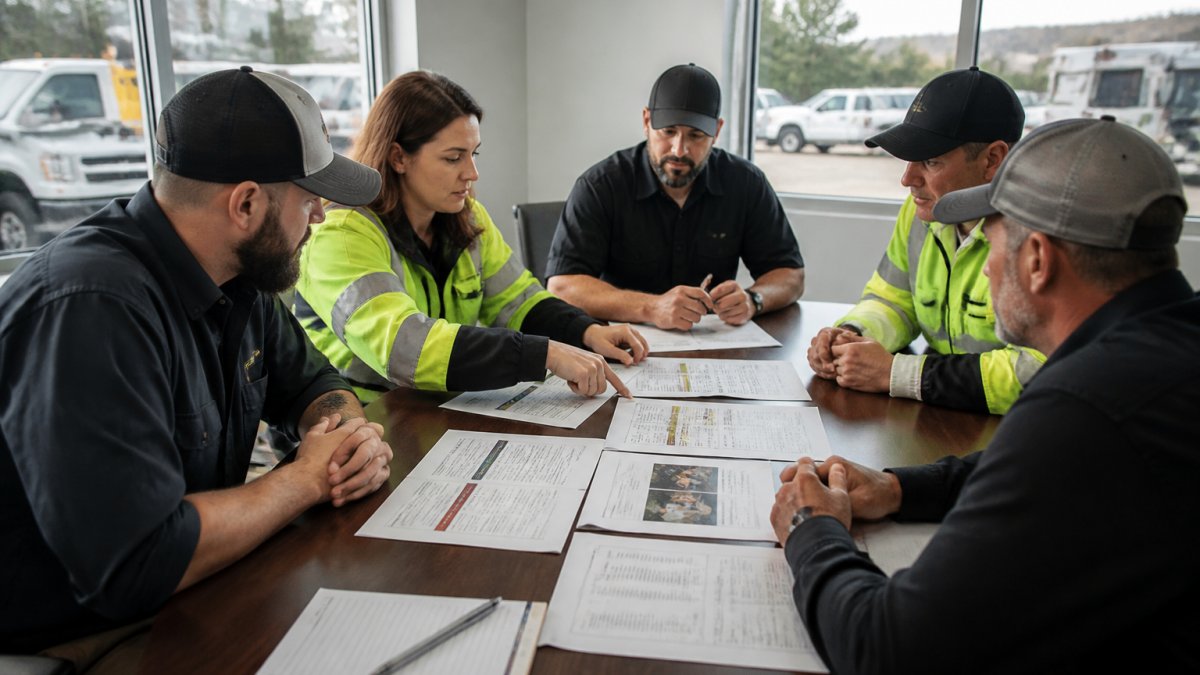
A real emergency response plan answers specific questions: Who does what? When do they do it? How do they communicate? What resources do they use? What happens after the immediate crisis passes?
Essential Plan Components
A working plan includes these elements:
Incident classification and triggers. Define what constitutes an emergency in your operation. A minor vehicle fender-bender isn’t an emergency. A multi-vehicle collision with injuries is. Be specific about what activates your response procedures.
Notification procedures. Who gets notified first? How fast? Through what method?
Command structure and decision authority. Who’s in charge at the scene? Who makes the call to evacuate?
Resource allocation. Where are first aid kits, emergency equipment, and backup supplies located? Who’s trained to use them?
Communication during and after the incident. How do responders stay in contact?
Documentation and reporting. Who investigates what happened? What gets recorded? How quickly does the report get completed?
Roles, Responsibilities, and Communication Procedures
Every person in your organization should know their role in an emergency. Not just the obvious ones like “incident commander” or “first responder”, everyone.
For a towing operation, that might include:
- Dispatcher: manages incoming calls, initiates notification chain, coordinates resource dispatch
- On-scene technician: secures the scene, assesses hazards, implements immediate response
- Supervisor: oversees operations, makes critical decisions, coordinates with external agencies
- Safety director: leads investigation, documents lessons learned, updates procedures
For a fire department or industrial facility, roles will differ, but the principle is identical: clarity eliminates hesitation.
Communication procedures matter as much as roles. If your team normally texts or uses radio, establish what they use during an emergency.
Emergency Response Training for Your Team
A plan that nobody understands is a plan that fails. Training embeds procedures into how your team actually responds under pressure.
Initial Training and Ongoing Instruction
When someone joins your organization, they need to understand your emergency response procedures from day one. This isn’t a one-time video or online module.
New employees should know:
- The specific hazards in their role
- Their assigned responsibilities in an emergency
- How to communicate during an incident
- Where emergency equipment is located
- How to recognize when a situation requires escalation
This training should come from someone with real operational experience, not a generic instructor. Supervisors and experienced team members are often the best trainers because they can answer the “but what if…” questions that come up in real work.
Adapting Training to Different Experience Levels
Your team includes experienced operators and newer workers. They need different instruction.
Experienced staff often skip training because they think they know the procedures. But experience can also breed complacency.
Newer workers need more foundational instruction. They’re learning both the job and the safety procedures simultaneously. Give them time to ask questions. Pair them with experienced people during early shifts.
Testing and Emergency Response Exercise Evaluation
A plan that’s never tested is a plan with hidden flaws. Testing reveals what works, what breaks, and where your team needs more practice.
Types of Drills and Exercises
Start with tabletop exercises. Gather key people in a room, describe a scenario, and walk through how your team would respond. No one’s actually moving equipment or simulating injuries, just talking through the sequence.
Progress to functional exercises. A specific part of your response gets activated. Maybe dispatch receives a call and notifies the supervisor and safety director.
Full-scale exercises simulate the entire incident response. This is where you discover whether your team can actually execute the plan under realistic conditions.
Measuring Plan Effectiveness
After each exercise, ask specific questions:
Did people know their roles and responsibilities? If not, training needs work.
Did communication happen as planned? If not, your notification procedures need adjustment.
Did resources get deployed correctly? If not, your equipment locations or allocation procedures need revision.
Did the response happen within the timeframe you expected? If not, identify bottlenecks.
Document what you learn. Update procedures based on what the exercise revealed. Communicate changes to your team. This cycle of testing, learning, and improving is what transforms a written plan into an operational reality.
Risk Mitigation and Continuous Improvement
An emergency response plan isn’t static. As your operation changes, new equipment, new locations, new staff, new regulations, your plan needs to evolve.
Prevention Measures and Risk Controls
The best emergency is one that never happens. Your plan should include preventive measures that reduce the likelihood of high-priority risks.
For industrial operations, it might include equipment guarding, lockout-tagout procedures, or environmental monitoring.
For fire departments, it might include building familiarization drills, equipment inspection routines, or training on emerging hazard types.
Preventive controls are your first line of defense. Emergency response procedures are your second line, for when prevention wasn’t enough.
Recovery Planning and Business Continuity
An incident response doesn’t end when the immediate crisis passes. Your team needs to know how to restore normal operations, investigate what happened, and prevent recurrence.
Recovery planning includes:
- How long can your operation function in a degraded state?
- What’s the priority order for restoring normal operations?
- Who handles the investigation and documentation?
- How do you communicate with customers, employees, and regulators about what happened?
- What changes will you make to prevent this from happening again?
Businesses that recover quickly from incidents are the ones that had thought through these questions in advance. They know which systems are critical, what their backup options are, and who makes decisions when normal processes are disrupted.
Common Mistakes in Emergency Response Planning
Teams often make the same preventable errors when building their plans.
Treating the plan as a compliance checkbox. You create a document, file it, and never look at it again.
Underestimating communication complexity. You assume people will know who to call or how to reach each other.
At Scomac Associates LLC, we help towing companies, fire departments, and industrial operations develop plans that actually work in practice.
Frequently Asked Questions
What should be included in an emergency response risk management plan?
A comprehensive plan includes risk identification and assessment results, hazard descriptions, roles and responsibilities, notification procedures, response actions for each scenario, communication chains, evacuation routes, assembly points, medical response protocols, recovery procedures, and training schedules. Document decision-makers, backup contacts, and coordination with external agencies like fire departments or emergency management. Include specific procedures for your operation’s unique hazards, for towing operations, this means heavy equipment incidents; for manufacturing, machinery hazards; for emergency response organizations, scene safety and personnel accountability.
How do you conduct an emergency preparedness risk assessment?
Start by listing all potential emergencies relevant to your operation: equipment failure, severe weather, vehicle incidents, fires, medical emergencies, or environmental hazards. For each hazard, document likelihood (how often it could occur), potential impact (injuries, property damage, operational shutdown), and current controls. Rate each risk on a simple scale, high, medium, low, based on the combination of likelihood and severity. Involve frontline staff who understand daily operations; they identify real hazards that office-only assessments miss. Review past incidents, near-misses, and industry data specific to your sector.
How often should emergency response plans be reviewed and drills conducted?
Review the written plan at least annually or whenever operations change significantly, new equipment, facility modifications, staffing shifts, or regulatory updates. Conduct drills or exercises at least once per year; many organizations practice twice yearly or quarterly for high-risk operations. After each drill, document what worked and what didn’t. Use findings to update procedures, training, or equipment. Regulatory standards like OSHA’s emergency action plan rules require annual review; fire codes and industry standards often recommend more frequent practice for emergency response organizations.
What makes emergency response training stick when generic online courses don’t?
Hands-on, scenario-based training tied to your actual workplace is far more effective than generic modules. Employees learn by doing, practicing evacuation routes, running through communication trees, handling equipment in realistic conditions, rather than watching videos. Training that reflects real hazards your team faces, uses your actual procedures and equipment, and involves the people who will execute the plan builds confidence and muscle memory. Include experienced staff and newer employees together so knowledge transfers. Follow up with refresher drills that reinforce what was learned and catch gaps before an actual emergency.
How can a small operation with limited staff manage emergency response planning?
Small operations can keep plans focused and practical. Identify your top three to five realistic emergencies, not every possible scenario. Assign clear roles even if one person covers multiple responsibilities, document backups so someone can step in if the primary person is unavailable or injured. Use simple written procedures and checklists rather than complex documents. Practice regularly with your available staff; even a 30-minute drill quarterly is more valuable than an elaborate plan that never gets tested. Coordinate with local fire departments, emergency management, or mutual aid agreements to supplement your internal capacity during actual events.
What is the difference between risk mitigation and risk acceptance?
Risk mitigation means taking action to reduce the likelihood or impact of a hazard, installing guardrails, improving lighting, adding communication equipment, or training staff on safer procedures. Risk acceptance means acknowledging that a hazard exists, understanding its potential impact, and deciding that current controls are adequate or that the cost of further mitigation outweighs the benefit. Every organization accepts some level of residual risk; the key is making that choice deliberately, documenting it, and ensuring controls are in place. Never accept a risk without first attempting reasonable mitigation measures and documenting your decision.
How do you evaluate whether an emergency response exercise actually worked?
After each drill or exercise, conduct a debrief with participants while events are fresh. Ask: Did people know their roles? Were communication channels effective? Did procedures work as written, or did staff improvise? How long did key actions take? What equipment or information was missing? Document observations, not just ‘it went well.’ Assign someone to track findings and follow up on corrective actions. Review incident reports and near-miss data over time to see if drills are reducing actual emergency response problems. Measure improvement by comparing performance across multiple exercises, faster response times, fewer procedural errors, better communication, rather than assuming one successful drill proves the plan works.